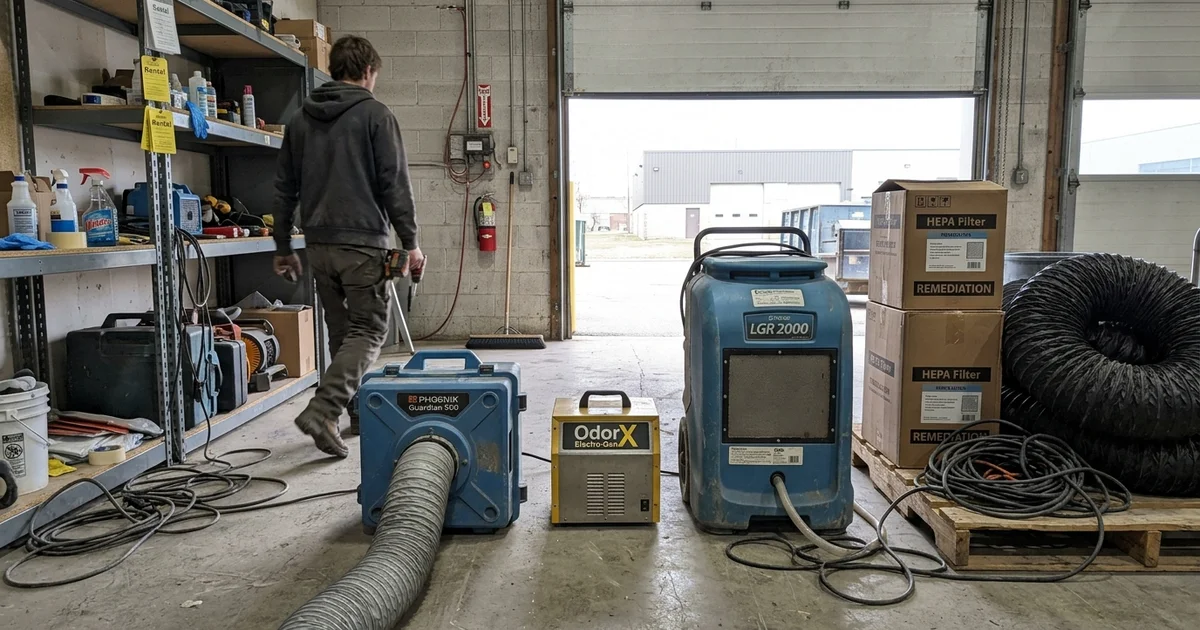
Three Machines, Three Jobs
We see families handling overwhelming estate clearances across Canada every week, and the sheer volume of dust and odour is usually the hardest part. Air quality issues slow down the entire process.
You might think grabbing a powerful fan will solve everything, but moving contaminated air around actually makes a difficult hoarding cleanup worse.
Our priority is making sure you get the exact right tool, which is why remediation equipment rentals require a conversation about your specific property conditions rather than just handing over a price list. Let’s look at the three main types of equipment, what the data tells us about safety, and the most common air scrubber dehumidifier rental uses for estate projects.
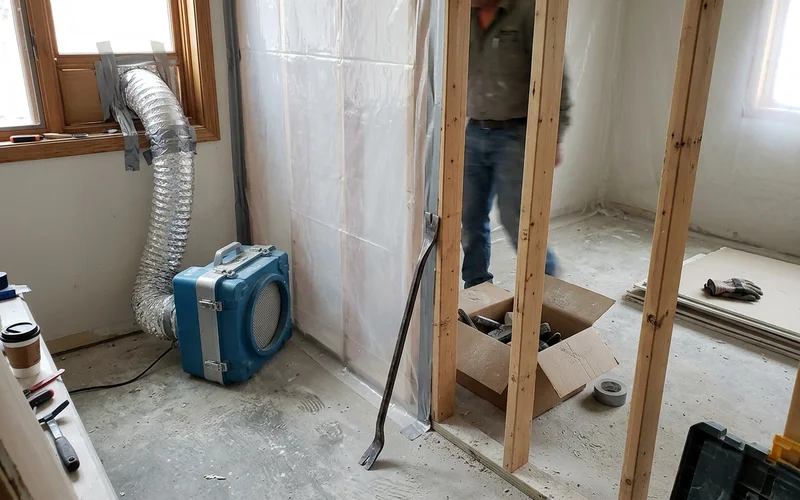
HEPA Air Scrubbers
The main function of a HEPA air scrubber is drawing contaminated air through a pre-filter and then a true HEPA filter. We always verify that our machines meet the strict standards required to capture 99.97 percent of particles at 0.3 microns. This microscopic level of filtration removes airborne dust, mould spores, and fine particulate from a neglected space.
Understanding True HEPA Filtration
Many consumer purifiers sold in hardware stores use unregulated terms like “HEPA-type” or “HEPA-like” that only capture 85 percent of particles. Our inventory relies strictly on True HEPA technology, aligning with ISO 29463 cleanroom standards to guarantee maximum safety during extreme cleanups. This distinction matters deeply because the American Psychiatric Association estimates that 2 to 6 percent of the population has hoarding disorder, meaning thousands of Canadian homes hide serious respiratory hazards.
Here is what an air scrubber effectively handles during an estate clearance:
- Renovation and demolition dust: Captures heavy particulate before it settles.
- Mould and biohazard spores: Traps dangerous organic matter disturbed during sorting.
- Rodent dander and allergens: Removes microscopic irritants from the air.
Negative Pressure and Sizing
Creating negative pressure is a vital technique where you duct the exhaust outside to stop particulate from migrating into clean areas of the building. We calculate sizing based on air changes per hour for your specific room volume. A standard target for basic dust control is four to six air changes per hour, while severe hoarding restorations require significantly more airflow.
Please note that these machines will not remove gases or odour molecules, as carbon filtration or oxidative treatments are necessary for those specific issues.
Dehumidifiers and Air Movers
Tackling a property that suffered a burst pipe or slow leak requires specific knowledge about which drying equipment to rent. We pair high-velocity air movers with low-grain refrigerant dehumidifiers to dry structures efficiently. Air movers direct air across wet surfaces to accelerate evaporation, while the dehumidifier pulls that resulting moisture out of the atmosphere.
The Structural Drying System
Using only one piece of this puzzle guarantees failure. Our teams frequently see DIY drying attempts fail because an air mover alone just pushes wet air around, while a dehumidifier alone dries the room air but leaves the physical walls soaked. A coordinated system is necessary to hit the targets recommended by Health Canada, which advises keeping indoor relative humidity between 30 and 50 percent during winter months to stop mould growth.
Avoiding Costly Mould Issues
An undersized unit will run for weeks without ever reaching a dry standard. We want to help you avoid the steep secondary costs of water damage. Canadian industry data for 2026 shows that professional mould remediation costs average between $2,000 and $6,000, and severe cases top $10,000.
Understanding how to size equipment based on ceiling height, saturation levels, and ambient conditions prevents these massive bills. Our comprehensive guide on how structural drying works explains this sizing process in full detail.
Equipment Roles in the Drying Process
| Equipment Type | Primary Function | What Happens If Used Alone |
|---|---|---|
| Air Mover | Accelerates surface evaporation | Spreads humid air, risking secondary mould. |
| LGR Dehumidifier | Extracts moisture from the air | Leaves building materials saturated and rotting. |
| Moisture Meter | Measures substrate dampness | Diagnostic tool only, performs no active drying. |
Ozone Generators
Finding a permanent solution for deeply embedded smells is a frequent challenge during estate clearouts. We highly regulate every ozone generator rental use because this specific technology carries intense safety risks if mishandled. The machine produces O3 gas, which actively oxidises odour compounds on contact and breaks them down into simpler, odourless substances.
Strict Safety Mandates
Health Canada strictly warns against breathing ozone, noting it impairs lung function and inflames pulmonary tissues. Our safety briefing emphasizes that the treatment space must be entirely empty of people, pets, and indoor plants. You must seal all doors, post clear warning signs, and allow a defined airing-out period before anyone re-enters the property.
Prolonged exposure at treatment concentrations also degrades rubber components and certain plastics inside the home.
When to Apply Odour Treatment
This technology is meant for severe odour treatment in a completely vacant space after you have already removed the physical source of the smell. We brief every single renter on these protocols directly, rather than just handing over a printed sheet. Getting this particular setup wrong physically hurts people, and consumer safety standards like those from the California Air Resources Board (CARB) clearly highlight the dangers of ozone in occupied spaces.
A moisture meter is worth renting too
Without readings, you are guessing about when drying is complete. Pulling equipment when a surface feels dry while the substrate is still wet is precisely how a water loss becomes a mould problem six weeks later.
When Renting Is the Wrong Call
Certain property disasters require full professional intervention rather than a weekend equipment rental. We will immediately tell you if your situation is too hazardous for DIY methods. Category 3 sewage water, advanced decomposition odours, or visible mould colonies behind drywall all signal a much larger issue.
Recognizing Professional-Level Hazards
Anything involving biohazards, used sharps, or intense chemical contamination falls outside the scope of basic equipment rentals. Our experience shows that running a machine over contaminated materials just delays the real work and wastes your rental budget.
Here are the absolute dealbreakers where renting equipment is the wrong choice:
- Category 3 Sewage: Raw black water containing harmful pathogens.
- Extensive Mould: Large colonies hidden behind structural drywall.
- Biohazards and Sharps: Dangerous waste common in severe hoarding environments.
The underlying problem in these cases is not the air, but the physical material that must be removed under strict environmental containment. We monitor local trends, and in 2026, specialized remediation services in provinces like Ontario and Alberta routinely price severe biohazard cleanouts into five figures because of strict disposal laws.
Losing a rental booking is a much better outcome than watching someone handle dangerous materials without proper training. We prefer to lose a small sale rather than see a family spend money on equipment that could never have fixed their problem safely. Your health always takes priority over a quick equipment turnaround.
What Comes With a Rental
Getting the right machinery is only the first step in restoring a family property. We calculate the exact CFM (cubic feet per minute) and air exchange requirements for your specific job size. Every basic package includes several critical support elements to keep your project moving.
Here is what you can expect from our team:
- Placement guidance: Strategic positioning for maximum airflow.
- Safety briefings: Clear instructions on power loads and handling.
- Run-time expectations: Accurate timelines to prevent over-renting.
If your moisture readings are not moving, you need to call the shop mid-rental for troubleshooting. Our technicians know that adjusting a setup early costs nothing, but extending the wrong setup costs a full week of rental fees.
Tell the team your room dimensions and exactly what happened to the property. We will work out the precise air scrubber dehumidifier rental uses you actually need to finish the job safely. Reach out to our support desk today to discuss your estate clearance, and let’s get your cleanup started on the right foot.