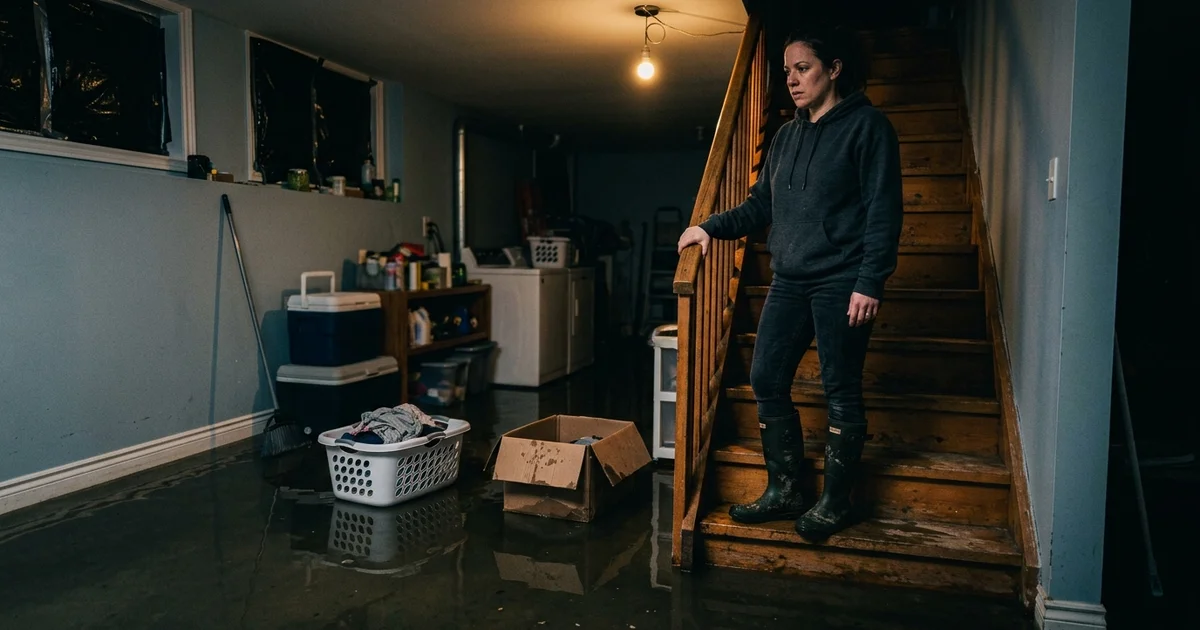
Every year, the calls change with the weather. Through July and August we are mostly on hoarding, estate, and odour work. From late September the phone starts ringing at two in the morning about basements, and it does not really stop until spring.
Hamilton’s fall and winter pattern is unkind to drainage. Heavy autumn rainfall saturates ground that has not yet frozen, then the freeze-thaw cycle works on foundations, joints, and lateral connections through the coldest months. Older neighbourhoods in the lower city, Dundas, and parts of Ancaster carry the extra complication of aging infrastructure and combined sewer sections.
Here is what is worth doing before the wet season, and what to do in the first ten minutes if it happens anyway.
Before the Season: Five Things That Actually Matter
Most basement-flooding advice is a list of twenty items nobody completes. These five are the ones that change outcomes.
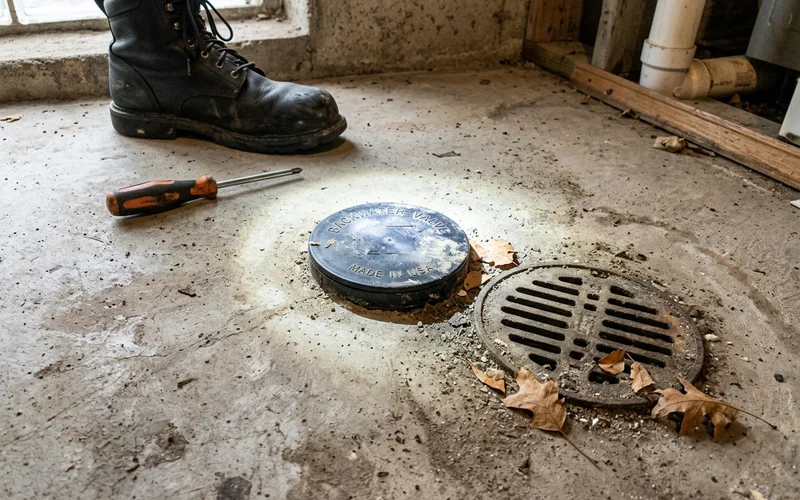
Check whether you have a backwater valve, and whether it works. A backwater valve prevents municipal sewage from flowing back into your home through the lateral. If you have one, it needs to be inspected and cleared of debris; if you do not, it is worth pricing. The City of Hamilton has historically offered a protective plumbing subsidy program, and it is worth checking current eligibility.
Test the sump pump now, not in November. Pour a bucket of water into the pit and confirm it runs and discharges. Check the discharge line is not aimed back at the foundation, and consider a battery backup, because the storms that fill your sump are the same storms that take out the power.
Clear the eavestroughs and check the downspout extensions. Water dumped at the foundation is the single most common cause of seepage. Extensions should carry discharge at least two metres away and onto ground sloping away from the house.
Look at the grading. Soil settles against foundations over years, and a negative slope funnels every rainfall straight down the wall. This is unglamorous and it prevents more claims than anything else on the list.
Confirm your insurance actually covers sewage backup. This is the one that surprises people. Standard Ontario home policies frequently exclude sewer backup unless you carry the specific endorsement. Check your policy now, while it costs a phone call rather than a renovation.
Worth knowing
Sewage is Category 3 water from the first minute. It is not “dirty water”, it is grossly contaminated water carrying bacteria, viruses, and parasites, and it requires containment, removal of porous materials, and full disinfection. Nothing about that is a shop-vac job.
If Water Appears: The First Ten Minutes
The instinct is to start moving things and mopping. Do not.
Stay out of the water. If the basement has electrical outlets, appliances, or a furnace, and there is standing water, treat it as energised until you know otherwise. If you can shut off power to the basement from a dry position at the panel, do it. If you cannot reach the panel without crossing water, leave it and call an electrician or the utility.
Do not run a shop vacuum through sewage. Beyond the electrical risk, it aerosolizes contaminated water and cross-contaminates whatever you use the vacuum for next.
Photograph everything before you move anything. Wide shots of each affected area, then closer shots of standing water depth against a fixed reference like a stair riser or a baseboard. Insurers ask for this, and it is far easier to capture now than to reconstruct later.
Call for extraction immediately. Mould can establish within 24 to 48 hours of a water loss. The single biggest factor in what the job ends up costing is how quickly extraction starts.
What Happens When We Arrive
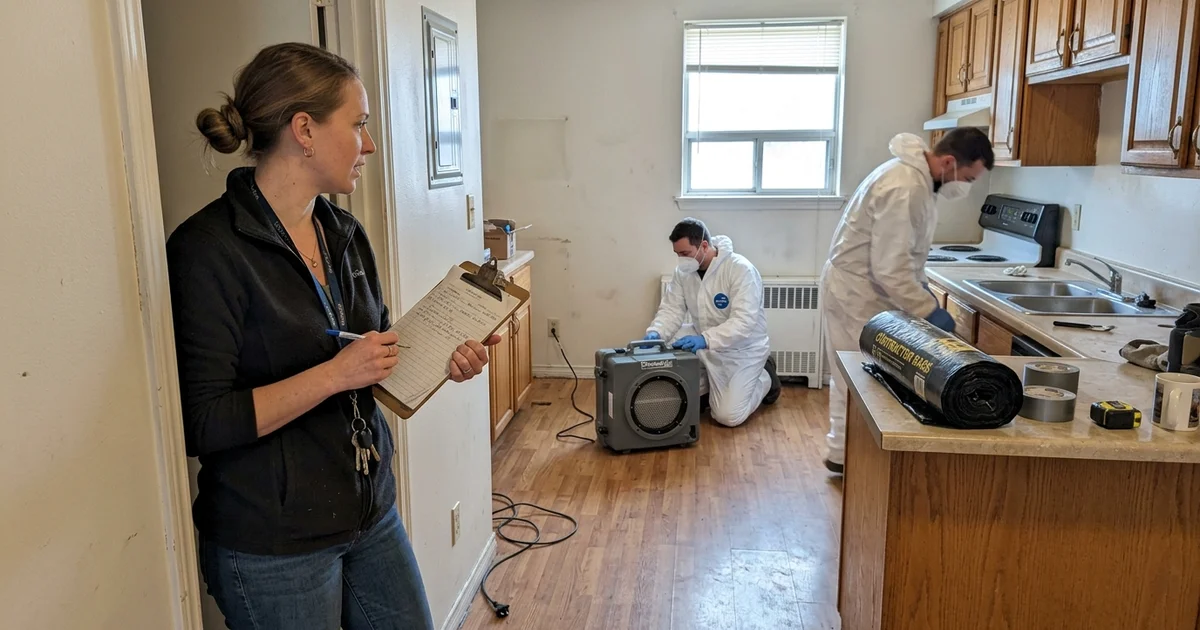
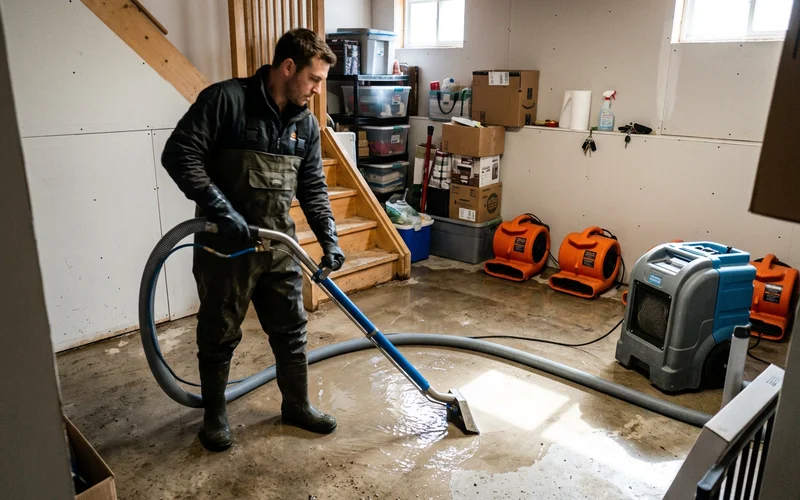
Extraction first, while we assess category and extent. Then containment, so contaminated water does not track into unaffected areas of the home. Porous materials that have absorbed Category 3 water come out: carpet, underlay, particleboard, the lower section of drywall. Non-porous surfaces and structural materials get disinfected.
Then drying. Thermal imaging and moisture meters map where water has actually travelled, which is usually further than the visible line. Air movers and low-grain refrigerant dehumidifiers run according to the IICRC S500 standard, with readings logged daily until the structure reaches dry standard rather than until it feels dry.
| Risk factor | Cost if handled in hours | Cost if handled in days |
|---|---|---|
| Category 3 water | Extraction and disinfection | Full material removal and rebuild |
| Mould growth | Preventable | Remediation with containment |
| Structural absorption | Dried in place | Subfloor and framing replacement |
| Odour | None residual | Separate odour treatment required |
We document the entire process and submit directly to your insurer, including moisture logs, scope, and photographs.
One Last Thing About Timing
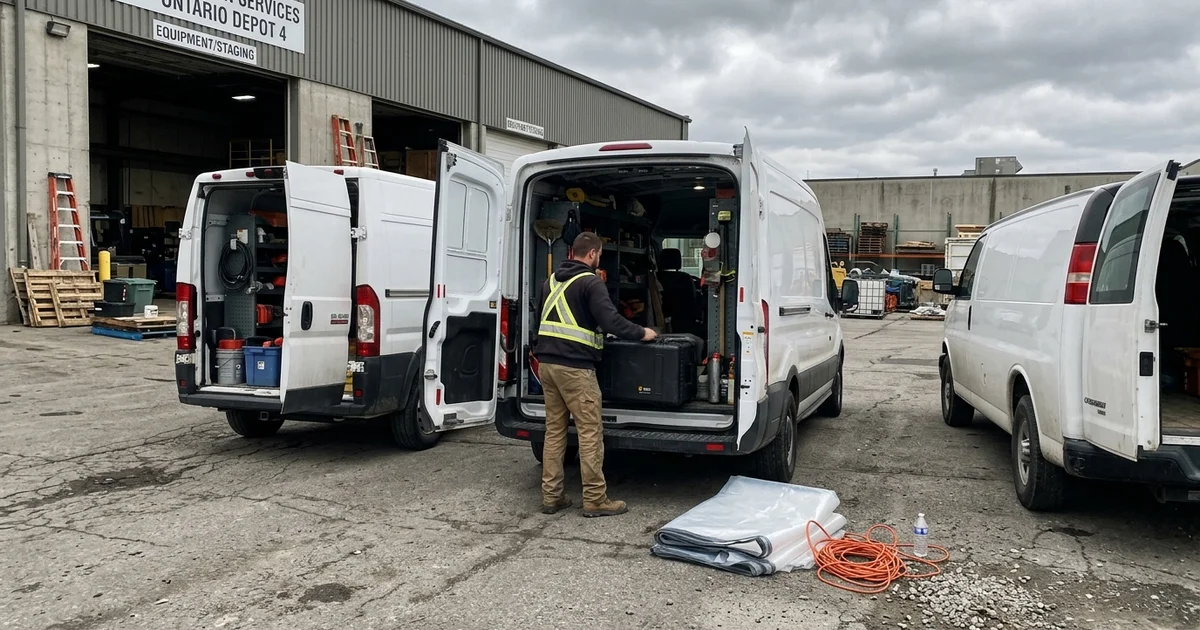
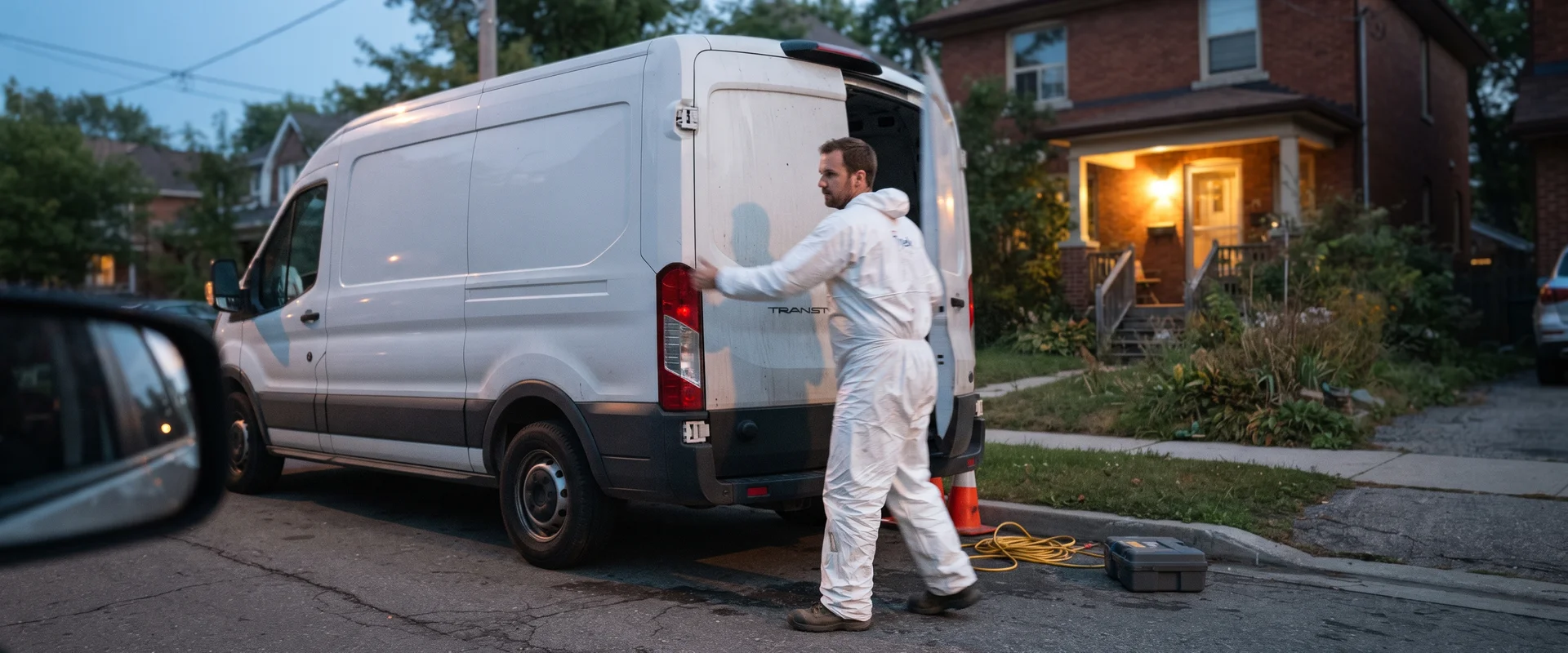
Nobody plans a sewage backup for a convenient hour. Ours arrive overnight and on weekends more often than not, which is exactly why we dispatch 24 hours a day, 365 days a year, with a 1 to 2 hour target across Greater Hamilton and Kitchener-Waterloo.
If you are standing at the top of the basement stairs looking at water right now, stop reading and call. Everything else in this post can wait until tomorrow.
Water in your basement tonight? — See how our water damage restoration works
Water Damage & Sewage Backup
Emergency water extraction, sewage decontamination, and structural drying to prevent secondary damage.
The Extreme Clean Team
Certified Remediation Technicians
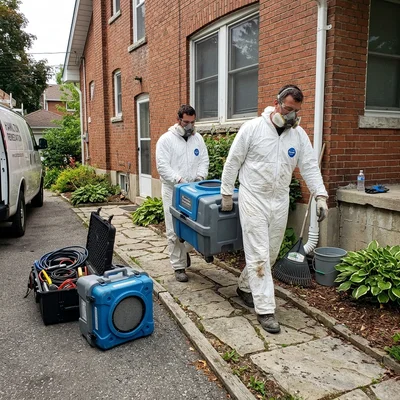
The Extreme Clean team is a crew of certified bio-recovery technicians serving Hamilton, Kitchener-Waterloo, Halton, and Niagara. Trained in IPAC infection control, bloodborne-pathogen handling, and structural drying, they deliver discreet, compassionate remediation around the clock.
✓ IPAC Trained · IICRC WRT / AMRT Certified