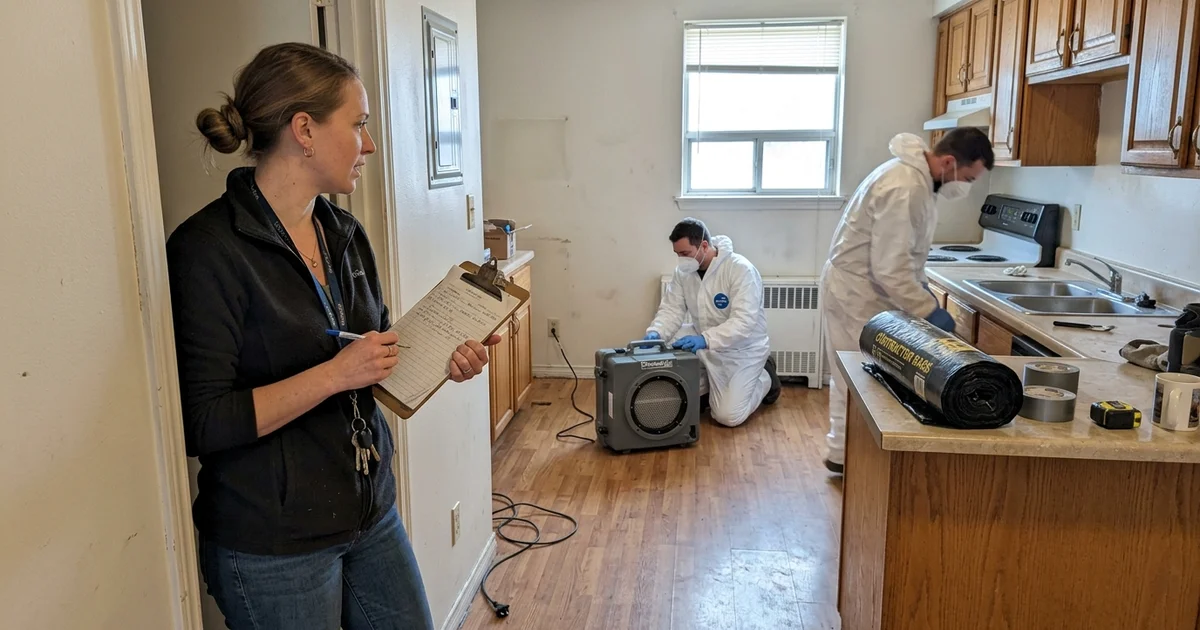
A property manager in Kitchener called us on a Monday afternoon. One of his tenants had moved out over the weekend, and the unit that came back was not a unit he could re-rent. Accumulated material filled every room to roughly waist height, there was animal waste through two of them, and he had spotted needles near the bedroom baseboard.
He had already called two other companies. Both had walked the unit and declined it.
Why Two Other Companies Said No
This is the most common way we get introduced to a property manager, and the reason is almost never unwillingness. It is licensing.
A junk-removal company can legally take furniture, household goods, and general waste. It cannot legally transport or dispose of biohazardous material, and sharps are regulated separately again. The moment animal waste and needles enter the picture, a general clearance crew is looking at a job that exposes their staff, breaches their insurance, and produces waste they have no lawful route to dispose of. Saying no is the correct decision on their part.
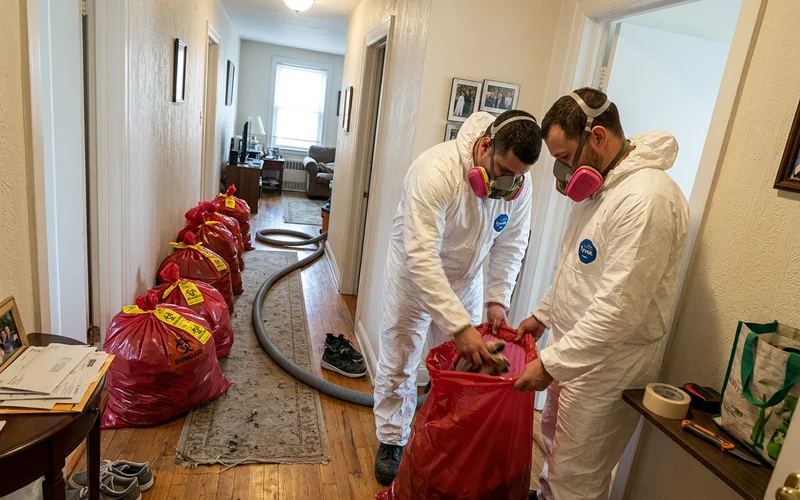
We hold ABRA bio-recovery certification and IICRC Triple Master designations, and we dispose of biohazard waste through licensed haulers under Ontario Regulation 347. That is the whole difference. It is not that we are braver; it is that we are set up for it.
What the property manager actually needed
Not just a clearance. He needed the unit safe, the waste disposed of legally, the condition documented for insurance and for a possible Landlord and Tenant Board matter, and the whole thing finished before the next tenant viewing on Thursday.
Day One: Assessment, Containment, and the Dangerous Material First
We attended Monday evening for the assessment and started Tuesday morning with three technicians.
Sharps came first. Needles were recovered with puncture-resistant gloves and long-handled tools into rated sharps containers, with every item documented on a sharps manifest. We found eleven, which is roughly what we expected given what was visible from the doorway. Trying to clear furniture around unrecovered sharps is how technicians get stuck, so that work always leads.
Then containment. Air scrubbers running with HEPA filtration, negative pressure toward the affected rooms, and full PPE for the crew: Tyvek suits, P100 respirators, and nitrile over gloves. Animal waste in an enclosed unit means airborne particulate the moment material starts moving, and neither our staff nor the neighbouring units needed that circulating.
By the end of day one the sharps were out, the two contaminated rooms were contained, and roughly forty percent of the general contents had been bagged and removed.
Day Two: Clearance and Decontamination
Day two was volume. Room by room, with two passes: one to bag and remove, one to recover anything that looked like it belonged to someone. Even in an abandoned unit that matters. We set aside a shoebox of documents, a passport, and a small quantity of personal photographs, all of which the property manager was obliged to hold for the former tenant.
| Phase | Time | Output |
|---|---|---|
| Sharps recovery | Day 1, morning | 11 items, manifested |
| Containment setup | Day 1, morning | HEPA scrubbers, negative air |
| Bulk clearance | Day 1-2 | Full contents removed |
| Biohazard remediation | Day 2 | Waste removed, substrate disinfected |
| Deep clean and odour | Day 3 | Unit rent-ready |
With the contents gone, the actual contamination was visible for the first time. Animal waste had saturated the carpet and underlay in both affected rooms, and it had wicked into the subfloor along the wall line. Carpet and underlay came out. The subfloor was HEPA-vacuumed, treated with a hospital-grade disinfectant at full dwell time, and then sealed.
Day Three: Deep Clean, Odour, and Handover
The last day was cleaning and odour. Kitchen and bathroom deep clean, appliance interiors, cabinet interiors, walls washed, windows done. The unit still carried odour at that point, which is normal once contaminated material has been in place for months, so we ran a hydroxyl generator through the afternoon and evening.
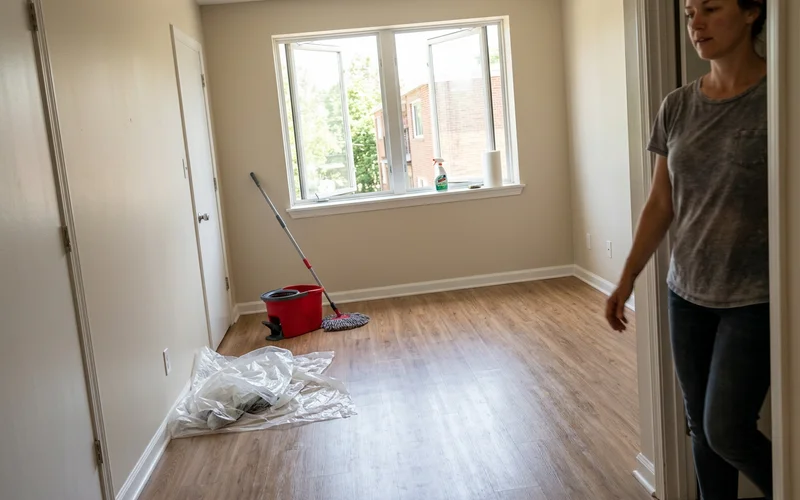
We handed over Thursday morning with a documentation package: before and after photographs of every room, the written scope, the sharps manifest, and the biohazard disposal records. The viewing went ahead that afternoon.
What Property Managers Should Take From This
Three things are worth pulling out of this job.
First, a unit like this is not beyond saving and it does not need weeks. What it needs is a crew that can legally do all of the work rather than the easy eighty percent of it.
Second, documentation is worth as much as the clearance. Photographs, a written scope, and disposal records are what support an insurance claim and what stands up at the Landlord and Tenant Board. Ask for them as standard, from whoever you hire.
Third, call earlier than you think you need to. Every week a contaminated unit sits, odour penetrates further into structure and the remediation gets more expensive. This one was three days because he called on the Monday.
Dealing with a unit nobody else will take? — See how our hoarding cleanup service works
Hoarding Cleanup & Gross Filth
Compassionate, discreet deep cleaning for severe hoarding and gross-filth environments.
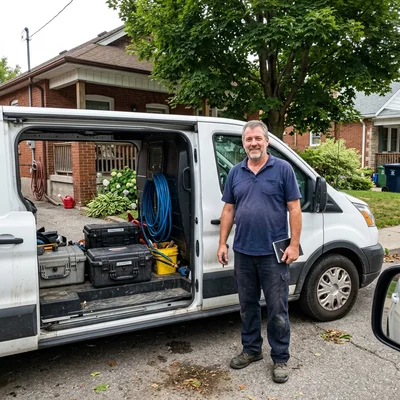
Dean Lemens
Owner & President, Extreme Clean Group
Dean Lemens is the owner and president of Extreme Clean Group and leads Hamilton Hoarding Pros. With over 20 years of experience in biohazard, trauma, and extreme cleaning across Greater Hamilton and Kitchener-Waterloo, he holds Triple Master IICRC certifications and ABRA credentials.
✓ IICRC Triple Master · ABRA Certified · Type 3 Asbestos Supervisor