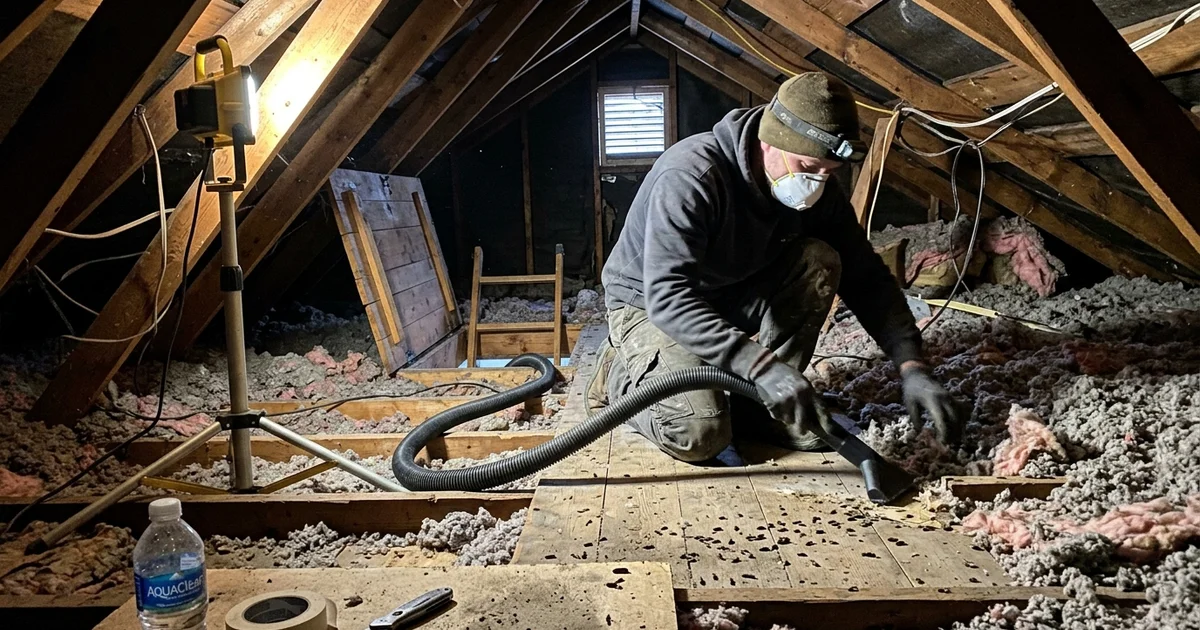
As a professional biohazard remediation team operating across Canada, we often see families managing an estate clearance or a difficult hoarding situation underestimate the dangers hidden in the home. You might look at a pile of droppings in the attic and think the main issue is simply the mess.
Understanding the animal feces cleanup health risks is crucial before you touch anything.
The Risk Is in the Disturbance
The truth is that undisturbed animal waste sitting in a crawlspace is not doing much harm. The hazard appears the exact moment someone tries to move it.
Dried material quickly becomes airborne particulate. Airborne exposure is the primary route that causes severe respiratory illnesses.
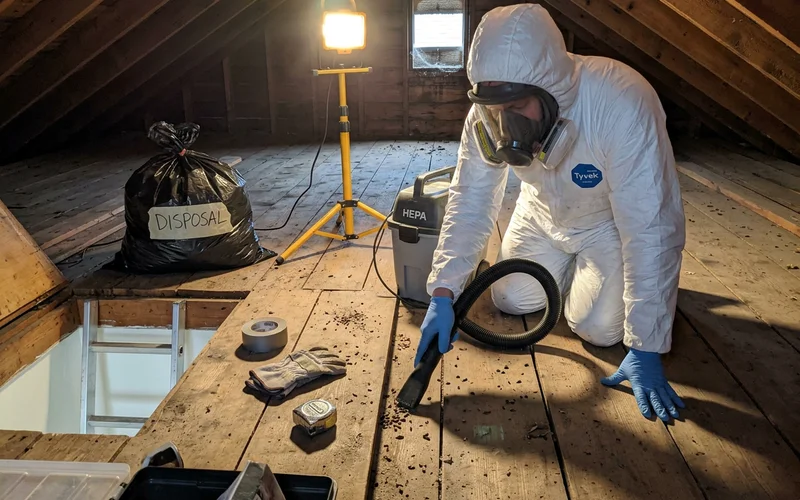
This specific fact is why animal waste and biohazard removal requires strict containment and respiratory protection rather than a basic broom.
Professionals know that a standard dust mask will not stop microscopic pathogens. We focus on controlling three distinct hazard vectors during every job:
- Aerosolized Spores: Fungal pathogens that float in the air when dry waste is disturbed.
- Parasite Eggs: Microscopic roundworms that survive in the soil for years.
- Viral Particulate: Dangerous viruses carried in dried rodent urine and saliva.
Then, this guide will walk you through the exact safe removal sequence used in the industry today.
What Each Type Actually Carries
Each type of animal waste introduces specific, severe pathogens into your home environment. We categorize the danger based on the species that left the waste behind.
Rodent Droppings and Urine
Deer mice, white-footed mice, and red-backed voles are the primary carriers of the Sin Nombre virus in Canada. Hantavirus is the major concern here. This rare but serious respiratory illness is transmitted by inhaling aerosolized particles from dried droppings, urine, or nesting material.
A 2026 update from Canadian health authorities notes that hantavirus pulmonary syndrome carries a mortality rate of around 30 percent. Rodent waste also carries salmonella and leptospirosis.
Our crews frequently find that urine saturating the insulation creates a persistent odour. This smell survives long after the solid waste is removed. The same puncture-resistant handling and licensed disposal chain we use for discarded needle and syringe recovery applies to any sharps uncovered alongside the waste.
Pigeon and Bird Droppings
Accumulated droppings from pigeons and starlings support the growth of Histoplasma capsulatum in the underlying material. The pigeon droppings health risk is severe because disturbing the waste releases tiny spores called conidia.
These spores are only two millionths of a meter in diameter. They easily bypass natural airway defenses when inhaled.
This inhalation causes histoplasmosis, which presents as a severe respiratory illness. Cryptococcus is a second fungal concern in accumulated bird waste.
Raccoon Latrines
Raccoons defecate repeatedly in the exact same location to create concentrated deposits called latrines. Proper raccoon latrine cleanup is incredibly critical because these piles often contain Baylisascaris procyonis roundworm eggs.
A single raccoon can pass millions of these microscopic eggs daily. These eggs are highly resistant to standard household chemicals and can persist in soil for years.
Ingestion of the eggs is the typical exposure route. The resulting neurological outcomes in rare cases are extremely severe, especially for young children.
Bat Guano
Bat feces also support the growth of Histoplasma spores. Bats are a protected species under the Ontario Endangered Species Act and similar wildlife conservation laws across Canada.
Exclusion work is heavily regulated. You are legally restricted from performing removals during the summer maternity season.
Who is most at risk
Immunocompromised people, those on immunosuppressive therapy, people with existing respiratory conditions, young children, and older adults. For these groups, the threshold for professional handling should be lower, not higher.
Why the Usual Approach Makes It Worse
Most homeowners attempt to clean up waste using standard garage tools. This standard approach actively increases your exposure to dangerous pathogens.
Avoid these common and dangerous mistakes:
- Sweeping: This maximizes the aerosolization of dry feces. It is the worst available method you can choose, yet it remains the most common one.
- Household Vacuums: A regular shop vacuum exhaust simply blows fine biological particulate straight back into your breathing zone.
- Basic Dust Masks: Standard masks are not rated for fine biological particulate. A properly fitted N95 respirator is the absolute minimum requirement.
- Leaving Insulation: Insulation absorbs animal urine and holds droppings deep within its fibers. Leaving it in place preserves both the pathogen load and the foul odour.
Equipment Comparison: Standard Vacuums vs. HEPA
Upgrading your equipment is vital for safety. Here is a clear breakdown of why standard tools fail during biohazard cleanup.
| Feature | Standard Shop Vacuum | Certified HEPA Vacuum |
|---|---|---|
| Filtration Size | Allows particles smaller than 10 microns to escape. | Captures 99.97% of particles down to 0.3 microns. |
| Exhaust Safety | Blows fine pathogens back into the room air. | Sealed system prevents airborne cross-contamination. |
| Appropriate Use | Sawdust, drywall debris, and water spills. | Hantavirus, mould, and biohazard remediation. |
The Safe Sequence
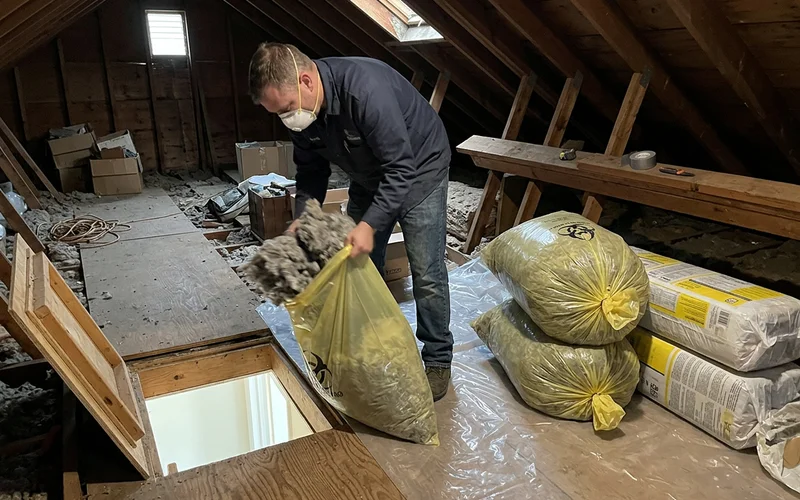
Cleaning without a plan puts everyone in the building at risk. Our technicians follow a strict protocol to isolate and remove biohazards safely.
This sequence ensures the contamination does not spread into your clean living areas.
- Exclusion and Containment: If animals are still entering, cleaning is only a temporary fix. Licensed wildlife control professionals must seal entry points first. We then set up physical barriers and negative air machines where the space connects to living areas.
- Dust Suppression: Dry material is lightly misted with a binding agent before removal. This critical step drastically reduces the amount of dust generated during the cleanup.
- Careful Removal: Contaminated insulation and nesting materials are carefully bagged and removed. Droppings are collected with specialized scoops rather than being swept up.
- HEPA Vacuuming: True HEPA filtration captures the fine particulate that ordinary vacuums release back into the air. This eliminates the microscopic spores left behind after bulk removal.
- Disinfection and Odour Treatment: Appropriate products are applied to the substrate and allowed full contact time. Standard household bleach does not kill raccoon roundworm eggs, so extreme heat or boiling water is required for those specific latrines. Oxidative treatment follows the removal process to destroy lingering urine odours.
Where This Overlaps With Other Work
Animal waste is extremely common in severe hoarding environments. Pets or local wildlife often gain prolonged access to the home when clutter blocks entry points from being properly maintained.
In these difficult situations, the remediation happens as part of a comprehensive hoarding and gross-filth cleanup rather than as a separate job.
The Moisture Connection
We frequently find this waste alongside significant mould infestations. The same structural failures that let animals inside create perfect conditions for fungal growth.
Gaps in the building envelope, poor ventilation, and trapped moisture will inevitably compound the property damage. Resolving the biohazard usually requires addressing these underlying moisture issues simultaneously.
When to Call
Knowing when to step back can save you from a severe respiratory infection. You should contact a professional for any accumulation beyond a few isolated droppings.
Understanding the animal feces cleanup health risks is your best defense against accidental exposure.
Clear Thresholds for Professional Help
Families should immediately outsource this work if any of the following conditions exist:
- An immunocompromised person lives on the property.
- You discover a raccoon latrine of any size.
- There is a large accumulation of bird waste in a confined space.
For a handful of droppings in a well-ventilated garage, handling it yourself is reasonable. You must wear a properly fitted N95 mask and heavy gloves, lightly mist the area before removal, and apply strong disinfectants afterwards.
For anything more extensive, call our team directly. We will tell you honestly which side of the safety line your situation sits on, and help you determine the best next steps.