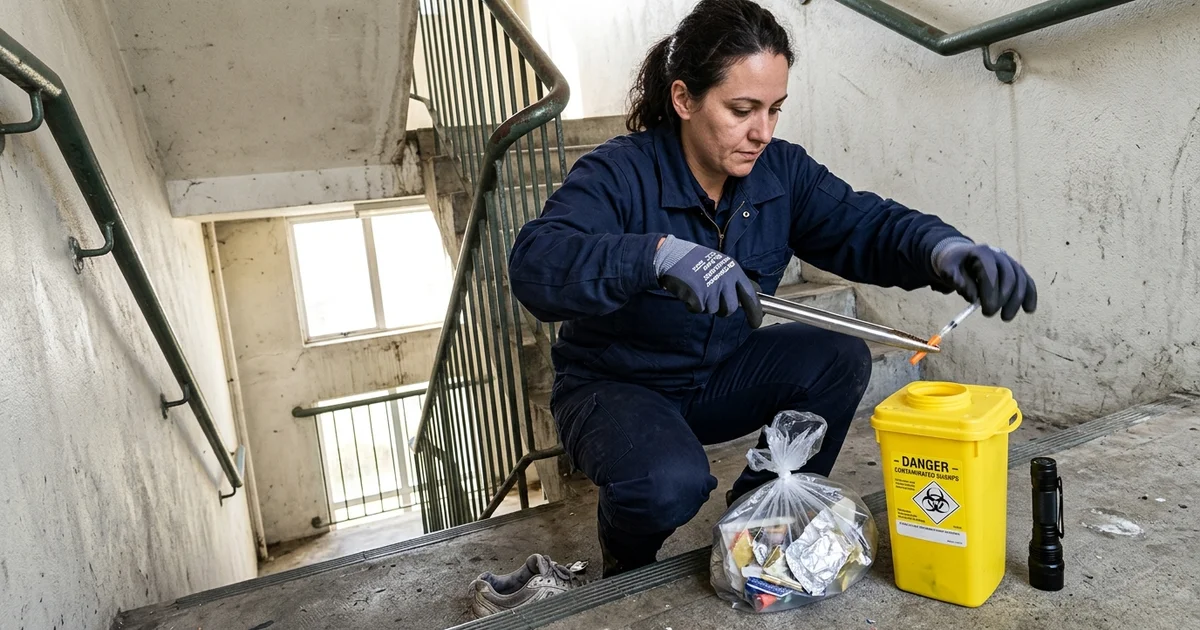
We often see families hit a wall when managing a needle syringe cleanup property task during an estate cleanout.
Finding a discarded needle instantly changes the scope of the project. That sudden risk is exactly why sharps and biohazard removal requires a completely different approach than a standard cleanout.
We will break down where these hazards typically hide. Let’s look at the actual risks, the required recovery methods, and the legal documentation you need to protect yourself.
Why This Needs a Certified Response
We treat every hazard as a serious puncture risk that requires regulated discarded needle disposal. The initial puncture might seem minor, but the rigorous medical testing that follows is a massive burden. Anyone exposed faces months of baseline testing and prophylactic treatments.
Our team knows this creates immense stress for a family member, executor, or caretaker. You also face a strict legal barrier regarding disposal. Sharps are heavily regulated under laws like Ontario Regulation 347. They cannot lawfully go into your residential garbage or a rented dumpster.
We strictly use approved biomedical waste channels to manage this issue. All items must go into specific containers that meet the Canadian CAN/CSA Z316.6 standard. These specific standards require restricted apertures and puncture-resistant walls to prevent accidental sticks. Our protocol ensures compliance with every provincial regulation. A certified response is the only way to protect your family and the public.
Where Needles Actually Turn Up
We systematically search specific danger zones because needles rarely end up in plain sight. The most dangerous locations are concealed areas where a person might blindly reach their hands. Data from 2026 shows that cleaning workers and community members face high rates of needlestick injuries simply by handling items improperly.
Over half of pediatric needlestick injuries in Canada occur in community spaces from discarded items. Our recovery process always anticipates these hidden threats. Inside a hoarding environment, the risks multiply rapidly.
The pattern of concealment is remarkably consistent across different properties.
- Inside soft furnishings. Sofas, mattresses, and cushions pose a severe risk. Hands go in before eyes do, which is why a visual search is mandatory.
- In gaps and concealed spaces. Needles easily slip behind baseboards or under carpet edges. You might also find them inside cabinets, beneath appliances, or in heating vents.
- Exterior locations. Stairwells, alcoves, and landscaping beds often hide discarded syringes. Any low-visibility corner adjacent to a public route requires careful inspection.
- Common areas of multi-unit buildings. Laundry rooms and storage lockers are frequent hotspots. Rarely used stairwells also provide a sheltered space for accumulation.
How Professional Recovery Works on a Needle Syringe Cleanup Property
We use a deliberate, systematic search grid rather than just picking up what is visible. Finding one visible needle almost always means others are hidden nearby. The item discovered by a family member three weeks later is usually the one that causes a severe problem.
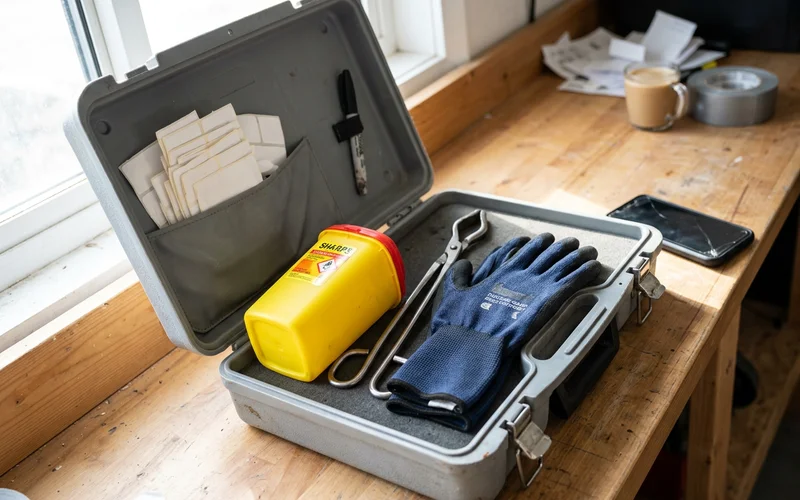
Our technicians wear specialized gear like TurtleSkin or HexArmor puncture-resistant gloves. These gloves feature tightly woven aramid fibers specifically designed to block thin needles. Standard leather or cut-resistant work gloves will not stop a direct puncture. We also use long-handled tongs to ensure nothing is ever picked up by hand.
Technicians place the recovered items directly into rated sharps containers. A critical safety rule is never filling these containers past the 75 percent mark. Overfilling is a common and dangerous failure in improvised handling. Our teams seal all containers on-site before transport. The collected waste then enters a licensed disposal route.
If someone has already been stuck
Encourage soap and water washing at the site rather than squeezing, and seek medical advice promptly. Post-exposure prophylaxis is time-sensitive. Record the date, location, and circumstances, both for the person’s medical file and for your own records.
Why Documentation Matters to Landlords
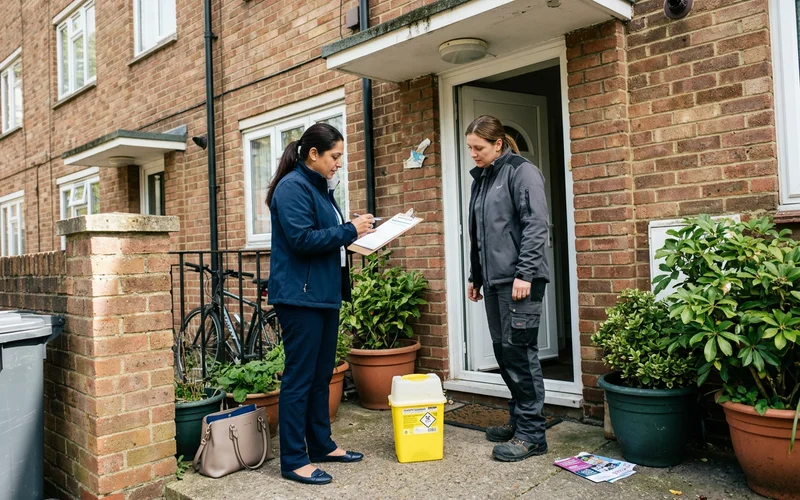
We provide a detailed sharps manifest to prove the hazard was lawfully resolved. This paperwork demonstrates that the property was professionally cleared of dangerous medical waste. Executors and property owners need this proof to limit their legal liability.
Our documentation includes several key details to protect you:
- Exact Quantity: A precise count of recovered sharps.
- Specific Location: Where the items were found on the property.
- Disposal Route: Proof of transfer to a licensed biomedical waste facility.
This specific record matters greatly during an insurance claim for unit damage or a remediation project. It is also vital for Landlord and Tenant Board matters in Ontario where unit conditions are disputed. Producing a dated, specific record is a materially stronger position than a verbal account.
We often find that unit turnovers involving sharps feature other biohazard contamination as well. You can read more about managing these difficult situations in the guide on landlord unit turnovers. A proactive sharps recovery landlord protocol ensures proper paperwork closes the loop on liability.
Prevention That Actually Works
We evaluate the specific layout of your property to recommend practical security changes. Environmental design is the most effective way to stop needles from accumulating in the first place. The goal is to remove the sheltered, low-visibility spots where people feel hidden. Our team points out the exact locations on your property that need immediate attention.
Improved lighting and clear sightlines are usually the most effective single changes you can make. Securing stairwells, alcoves, and laundry rooms with proper access control removes sheltered areas entirely. We also suggest modifying landscaping to reduce dense, low planting near entrances. Establishing a documented inspection schedule helps catch issues early. Finding one needle during a weekly check is a manageable routine. Discovering thirty needles during an estate cleanout is an entirely different crisis.
Our clients receive clear protocols for their caretaking and maintenance staff. Staff members must know never to handle sharps themselves. They should always have a direct number to call for professional dispatch. We are ready to respond immediately if you find exposed sharps right now. Handling a needle syringe cleanup property properly is a situation that should not wait.
Comparing Recovery Methods
| Feature | Professional Approach | DIY Approach (Not Recommended) |
|---|---|---|
| Equipment | HexArmor puncture-resistant gloves and tongs | Standard leather or thin rubber gloves |
| Containment | CAN/CSA Z316.6 rated containers | Plastic bottles or thin trash bags |
| Legal Compliance | Registered biomedical waste manifest | Improper disposal in general refuse |
| Risk Level | Highly controlled and systematically safe | High risk of needle stick injuries |