From what we have seen managing complex property cleanups across Canada, executors and families often face a confusing choice regarding crime scene cleaners vs junk removal. You know how one wrong call can delay an entire estate settlement.
Our goal is to help you see the functional dividing line between clearing out a property and decontaminating it.
Let’s look at the data, what it is actually telling us, and explore a few practical ways to choose the right service.
They Are Not Competing Services
These two trades perform entirely different functions, even though both involve removing items from a building. Junk removal moves non-hazardous contents from point A to point B.
We see standard junk hauling as a perfectly legitimate service for clearing regular furniture, boxes, and general household waste. Average 2026 rates for full-service junk removal in Canada sit around $500 to $800 for a full truckload. This makes standard hauling the correct choice for volume clearing.
Certified crime scene cleaning functions as specialized biohazard remediation. Content removal is only the smallest fraction of the job.
Our technicians focus on containment, decontamination, verification, and lawful disposal of regulated infectious materials. Hiring a biohazard crew for basic trash is over-buying. Selecting a junk hauler for biological hazards leaves the actual threat in the building.
The Four Gaps
The difference between these services comes down to training, equipment, legal licensing, and final measurement. A clearance crew empties a room.
We restore a space to a safe, documentable baseline. To make the distinction clear, review the functional differences below.
| Capability | Junk removal | Certified remediation |
|---|---|---|
| Bio-recovery certification | None | ABRA, IICRC designations |
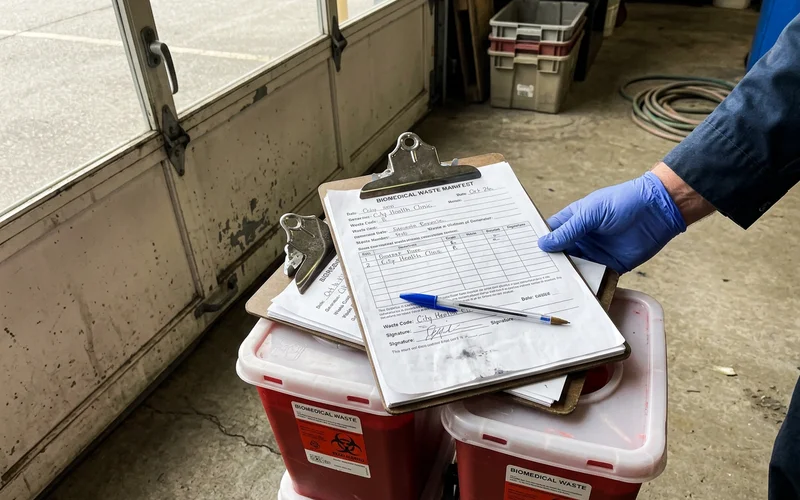
| Biohazard waste disposal | No lawful route | Licensed haulers, O. Reg. 347, manifested |
| Containment and PPE | Gloves, general workwear | Barriers, negative air, Tyvek, P100 |
| Verification | Visual | ATP bioluminescence with documentation |
| Vehicle branding | Fully branded | Unmarked |
| Sharps handling | Not equipped | Puncture-resistant tools, rated containers |
Certification Standards
ABRA covers specialized bio-recovery disciplines like pathogen handling, exposure control, disinfection chemistry, and waste segregation. The Institute of Inspection, Cleaning and Restoration Certification (IICRC) maintains the ANSI/IICRC S540 Standard for Trauma and Crime Scene Cleanup.
Our teams carry these specific designations to ensure every job meets strict safety protocols. A standard clearance crew holds neither credential. This lack of certification simply means biohazard work falls outside their regular trade.
Disposal Licensing and Laws
Proper disposal licensing represents the most decisive gap between the two trades. Biohazardous waste in Ontario falls under the strict rules of Ontario Regulation 347.
We must segregate, package, and transport this material using licensed medical waste haulers. Non-compliance in 2026 exposes property owners and businesses to regulatory penalties ranging from $1,500 to $25,000 per violation.
A junk removal company has no legal access to that regulated disposal route. Transfer stations will immediately refuse contaminated materials.
Containment and Protective Equipment
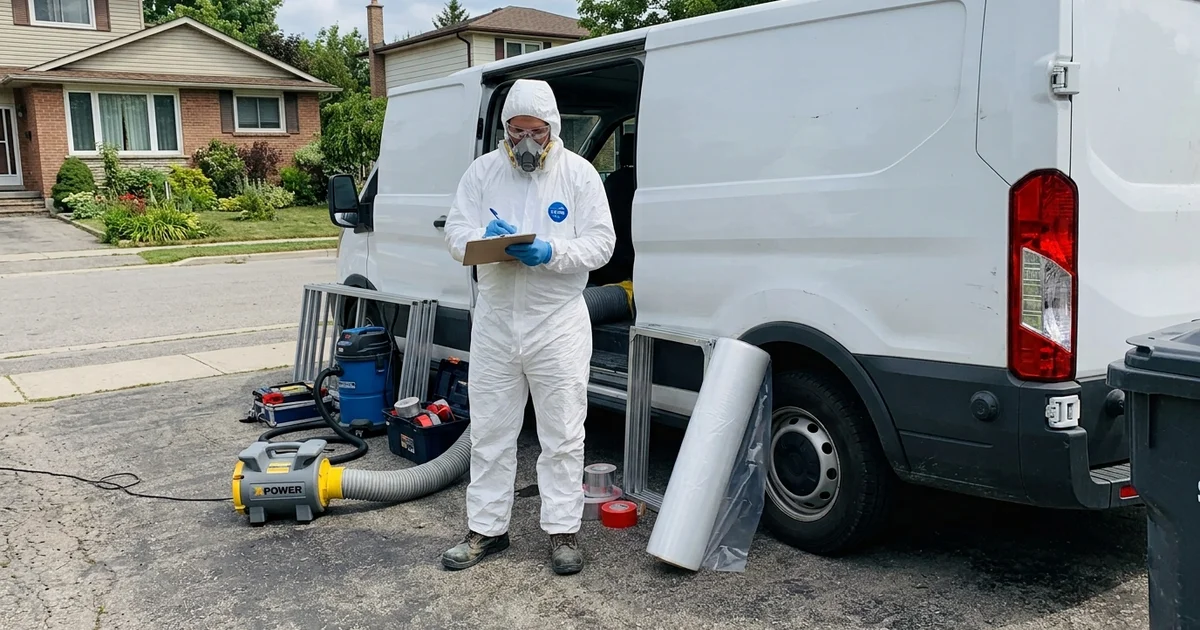
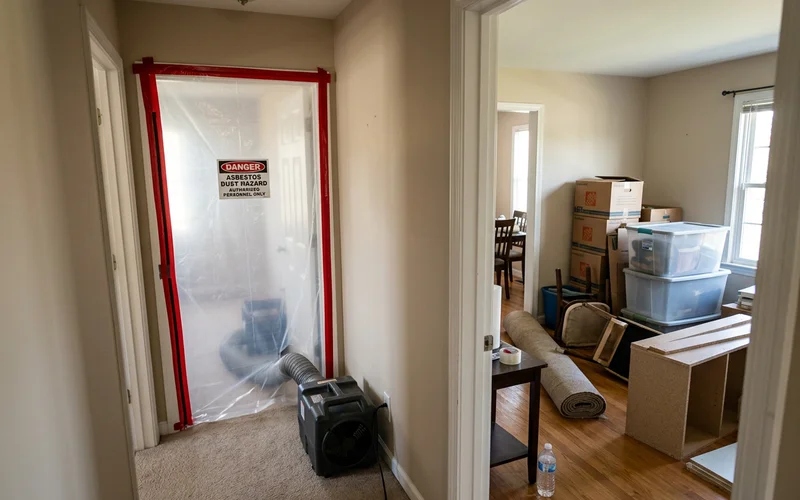
Remediation work happens inside a sealed, negative-pressure enclosure. Technicians require heavy-duty barrier suits like DuPont Tyvek and rated P100 respiratory protection.
Our crews use these tools to prevent microscopic pathogens from spreading. Clearance work generally happens with the front doors propped wide open. Opening doors in a contaminated environment guarantees the rest of the property becomes contaminated during the job.
Scientific Verification
Certified remediation ends with a precise scientific measurement. We use ATP bioluminescence testing to produce a numeric reading of residual biological material on surfaces.
In healthcare environments, a pass reading is typically 25 Relative Light Units (RLU) or lower. This hard data proves the area is genuinely safe. Clearance work simply ends when the truck is full.
The Discretion Difference
Privacy acts as a core feature of the service rather than an optional preference during sensitive cleanups. This applies heavily to trauma, suicide, unattended death, and severe hoarding situations. A brightly branded truck parked outside a house broadcasts a crisis to the entire street.
Our policy ensures total anonymity for our clients. Information travels immediately in small communities or apartment buildings.
Families dealing with a violent incident are already managing heavy emotional burdens. Becoming the subject of neighbourhood speculation creates a second, unnecessary injury.
Canadian privacy laws, such as PIPEDA, demand strict control over personal data. We extend that philosophy to visual privacy on site. True discretion requires several non-negotiable practices:
- Deploying plain, unmarked transport vehicles.
- Moving sensitive materials in sealed, opaque containers.
- Enforcing strict non-disclosure agreements for all on-site staff.
- Staging equipment quietly inside the property.
Liability and Documentation
Hiring an uncertified crew for a junk removal biohazard situation creates immediate legal and practical problems for a homeowner. Any remaining contamination or improperly disposed waste becomes the liability of the property owner. We see the responsibility attach directly to the estate rather than the cheap company that drove away.
Landlords and executors face even higher stakes because formal documentation is required later. Under Section 20 of the Ontario Residential Tenancies Act, landlords must maintain habitability. Executors hold personal responsibility for estate assets and can be held liable if contamination lowers property value.
Detailed photographs, written scopes of work, ATP verification readings, and Regulation 347 disposal manifests provide essential proof. Our complete documentation packages support insurance claims, Landlord and Tenant Board disputes, or final estate accounting. A basic clearance receipt offers zero legal protection in these scenarios.
When junk removal is the right call
Household contents with no biological contamination. Furniture and appliance disposal. General clear-outs where nothing has gone wrong beyond accumulation. In those situations a clearance company is cheaper and entirely appropriate, and we will tell you so.
How to Tell Which You Need
You need certified remediation if you discover specific biohazards inside the property. We require professional decontamination protocols for the following materials:
- Blood, bodily fluids, and human or animal waste.
- Sharps, needles, and drug paraphernalia.
- Fentanyl or carfentanil residue.
- Sewage backups and decomposition matter.
Modern risks like fentanyl contamination demand extreme caution. Our safety protocols align with 2026 Canadian health guidelines, which confirm fentanyl is fatal at nanogram levels. Never touch suspicious powders or drug paraphernalia during an estate clear-out.
If you are unsure about a property’s condition, describe the situation to a professional over the phone. A quick consultation takes only a couple of minutes and costs nothing. Our detailed guide on questions to ask before hiring provides a clear way to test any company’s answers, including ours.
Taking the right first step protects both your health and your legal standing. You can use the resources provided above to assess your specific situation accurately. Reach out to our team today if you need a confidential, accurate assessment of a contaminated property.