We often see families and executors overwhelmed when clearing an estate.
Dealing with persistent smells is one of the most frustrating parts of the process.
From what I have seen over the years, the challenge of pet urine dead animal odour removal comes down to misunderstanding the source.
Our team knows that standard surface cleaning simply does not cut it. Let’s look at the science behind these stubborn smells and outline the exact steps to eliminate them permanently.
Two Odours, One Chemistry Problem
Pet urine and decomposition odours share a core chemistry problem because both are protein-based compounds that penetrate deep into structural materials rather than just settling on the surface. Our experience shows that this shared trait defeats most standard cleaning attempts.
The main culprit in pet waste is uric acid, which forms hygroscopic crystals that actively pull moisture from the air to reactivate ammonia gas. Decomposition produces similar stubborn organic compounds, like cadaverine and putrescine, which bond tightly into porous subfloors and drywall.
| Odour Type | Primary Compound | Material Behavior |
|---|---|---|
| Pet Urine | Uric Acid Crystals | Bonds to fibres, reactivates with moisture |
| Dead Animal | Cadaverine & Putrescine | Penetrates deep into porous substrates |
We always explain that the smell you notice is continuously generated by a source buried inside the structure, not by a simple residue left on top. That is why scrubbing only gives you a few good days before the stench creeps back into the room.
Our odour removal services begin with tracking down and extracting that hidden source, rather than just plugging in a masking machine. For example, a single cup of dog urine on the surface can easily spread into a dinner-plate-sized contamination zone in the padding below.
Why Pet Urine Returns Every Summer
Pet urine smells return every summer because seasonal humidity reactivates dormant uric acid crystals trapped inside the flooring. We see this exact cycle play out in Canadian homes year after year. Urine starts out highly acidic and deposits salts as it dries out.
Our technicians find that these specific crystals are entirely insoluble in water. They sit quietly in the fibers until the ambient humidity spikes, which chemically reawakens the odour. This explains the frustrating pattern many property owners describe to us perfectly.
The carpet gets steam cleaned in the winter, and the room smells fresh for months. By July, when the windows are shut and the summer air is heavy, the awful stench is suddenly back and often much worse.
Common mistakes to avoid when treating these returning odors:
- Using ammonia-based household cleaners, which chemically mimic urine and encourage pets to remark the spot.
- Applying general carpet shampoo, which only washes away the water-soluble urea and leaves the acid crystals behind.
- Assuming the stain is only surface deep, when gravity pulls the liquid directly into the underlay and wood subfloor.
We know that nothing actually failed in the winter. The steam cleaning simply added the hot moisture needed to reactivate the crystals that were never properly neutralized.
Cat urine poses an especially tough challenge because cats are biologically designed to conserve water. Our teams deal with cat urine that is incredibly concentrated, packed with extra marking pheromones that make the recurring summer smell incredibly sharp.
Finding the Actual Extent
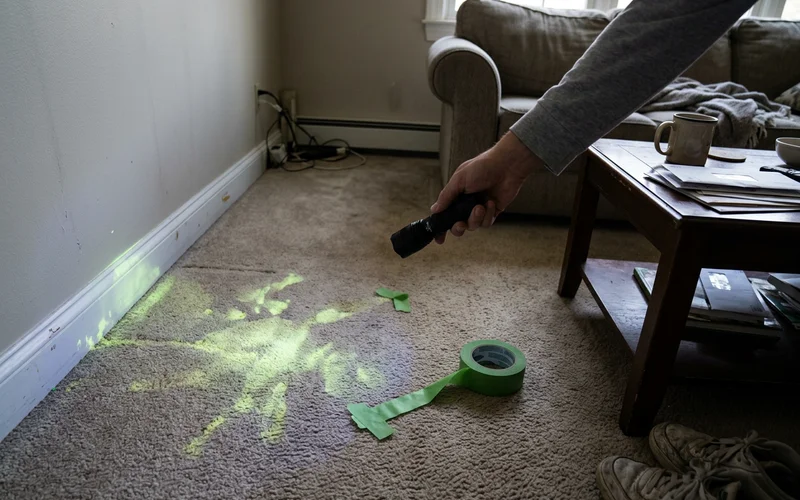
Finding the true extent of the damage requires using a high-powered UV inspection light in a completely darkened room. Our teams rely on this tool to map out the exact borders of the contamination zone. The specific proteins in organic waste fluoresce brightly under a 365nm blacklight.
We use this practical method to reveal spread patterns that normal daylight completely hides from view. Liquids naturally spread laterally as they sink through different material layers.
Key areas that require thorough UV mapping include:
- Primary carpet face fibers and secondary backing.
- Underlay pads, which act as sponges for liquid waste.
- Plywood or concrete subfloors hidden beneath the padding.
- Baseboards, drywall seams, and lower electrical outlets.
Our inspections often prove that a tiny two-inch surface stain is actually masking an eight-inch wide disaster in the secondary backing below. Homeowners and estate executors are routinely shocked by what the light reveals.
We frequently find that the small area they knew about is just a fraction of the total affected space. Cat pee is notorious for this, as cats often spray vertically against surfaces. Our thorough sweeps regularly uncover glowing splatter marks running down baseboards, seeping into drywall seams, and even reaching electrical outlets two feet off the floor.
The Treatment Sequence
The treatment sequence requires a strict process of locating the source, removing the saturated materials, and chemically treating the remaining substrate. We follow these exact steps to ensure the space is fully neutralized before anyone moves back in. Skipping any part of this sequence almost guarantees a callback when the weather changes.
Step-by-Step Remediation Process:
- Locate the source: Use UV inspection and moisture meters to map every affected square inch accurately.
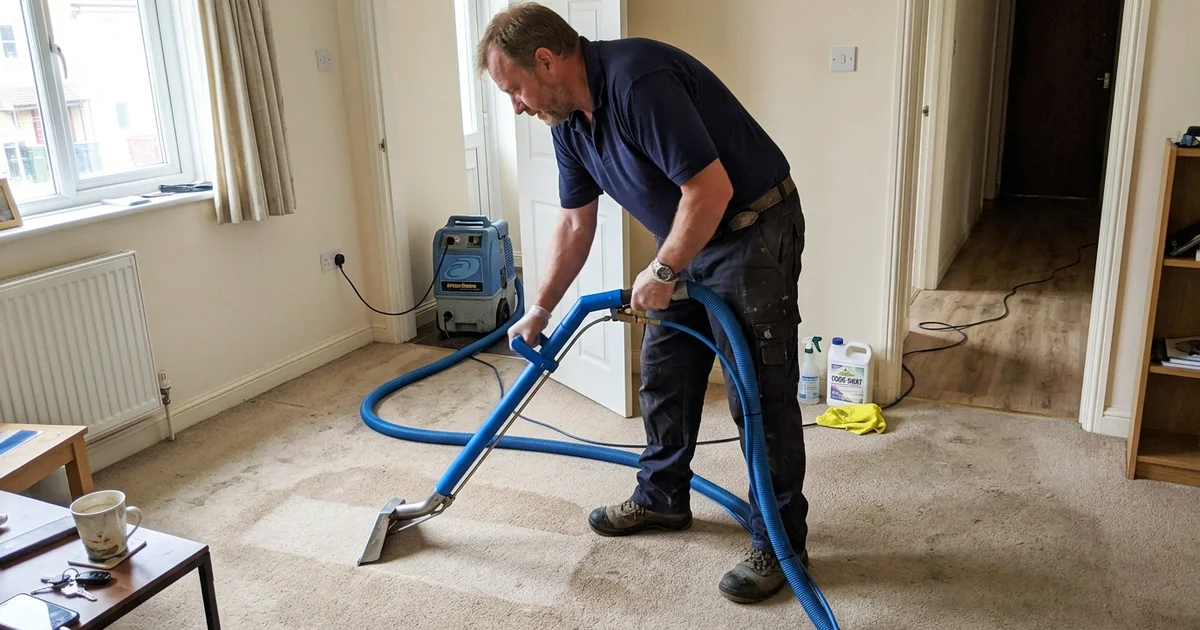
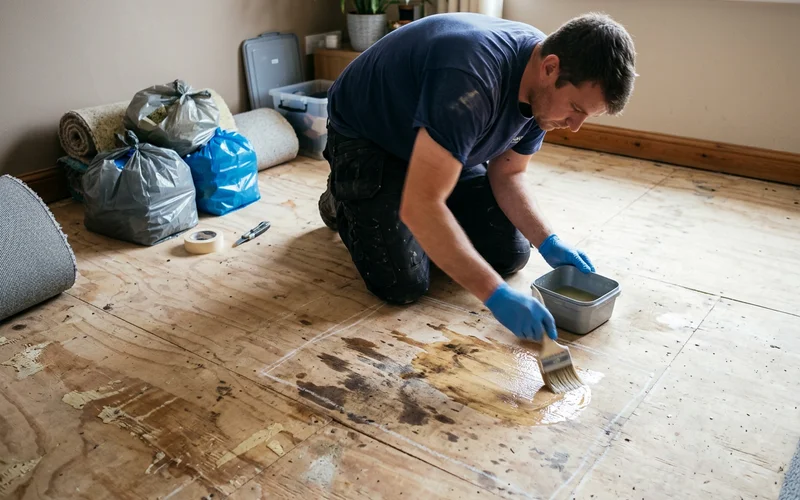
- Remove saturated materials: Pull out the contaminated carpet and underlay entirely. In-place extraction might work for a fresh, light accident, but we never pretend it will solve established saturation because that just wastes your money.
- Treat the substrate appropriately: Apply enzymatic cleaners to digest uric acid crystals biologically, or use oxidative treatments to break them down chemically. The choice depends on the severity, and the application must soak down to the full depth of the damage.
- Seal the remaining structure: Coat any non-removable subfloor with a synthetic, stain-blocking odour sealer to lock in microscopic remnants permanently.
- Oxidise the air: Deploy specialized equipment to address residual airborne compounds once the physical source is completely gone.
We often recommend a Titan Hydroxyl Generator for that final oxidation step if the property is occupied. Hydroxyl machines use UVA light and humidity to clean the air safely while you are in the house. Our alternative is an ozone generator, which is much stronger but requires the home to be completely empty during treatment.
Dead animals in walls and cavities
A dead mouse trapped inside a wall void typically produces a highly intense odour for seven to fourteen days, driven by temperature and humidity. We always aim to locate and physically remove the carcass, which resolves the stench very quickly. A larger animal like a raccoon can emit foul gases for months, making physical extraction absolutely critical. Where a carcass is genuinely inaccessible behind structural framing, specialized treatment and sealing can help manage the air quality while the natural breakdown process completes. Our guarantee to you is honesty; anyone promising instant dead animal smell removal without physically accessing the source is overselling an impossible result.
Decomposition Odour Specifically
Human decomposition odour is the most difficult category we handle, following the same penetration rules but with much higher stakes. We treat these sensitive situations with absolute urgency and discretion. The biological breakdown releases highly pervasive fluids that soak deeply into floorboards and joists.
Our standard protocol mandates that all porous source material must be physically removed before any chemical work begins. The underlying substrate is then heavily treated and sealed with a synthetic shellac to encapsulate the remaining lipids.
Timeline of structural penetration:
- Initial Stage: Fluids release and pool on the primary surface layer.
- Secondary Stage: Compounds like putrescine soak into the subfloor and joists.
- Advanced Stage: Vapours permeate the surrounding drywall and insulation.
Our comprehensive guide on the decomposition odour timeline explains exactly how this penetration progresses hour by hour. Final oxidative treatment then strips the remaining microscopic particles from the air.
We mention this extreme category here for one very simple reason. If a restoration company has the technical skill to completely resolve decomposition issues, handling basic tobacco or pet waste is incredibly straightforward by comparison.
Before a Sale or a Re-Rental
Both pet and decomposition odours are absolute deal-breakers for potential buyers and renters. We constantly see house hunters walk out of viewings immediately when hit with a foul wall of smell at the front door. Buyers instantly interpret lingering pet waste as a massive red flag for broader, hidden neglect throughout the property.
Our data shows that professional odour extraction, which often costs between $40 to $120 per affected spot in Canada, is dramatically cheaper than suffering a massive price reduction on the listing.
| Action | Estimated Financial Impact |
|---|---|
| Professional Odour Extraction | $40 to $120 per affected spot |
| Ignoring the Problem | Thousands lost in price reductions or empty months |
Unlike outdated paint or cosmetic issues, you cannot simply stage some nice furniture around a stench. We remind executors that air quality is the very first thing anyone notices when they step inside. It makes pure financial sense to address the contamination properly before listing the home.
Call our office for a realistic assessment of the property. We will tell you exactly what is salvageable and what needs tearing out, completely free of charge, before you spend a single dollar on a treatment that cannot work.
Removing stubborn smells requires science, not just heavy scrubbing.
We know how overwhelming it feels to manage an estate or clear out a neglected property.
Getting the right help early saves you time, money, and endless frustration.
If you are dealing with a lingering odour that just won’t quit, reach out to our team today to schedule a complete assessment.