What the Clutter Image Scale Is
You know how subjective words like “messy” or “cluttered” can be when assessing a home.
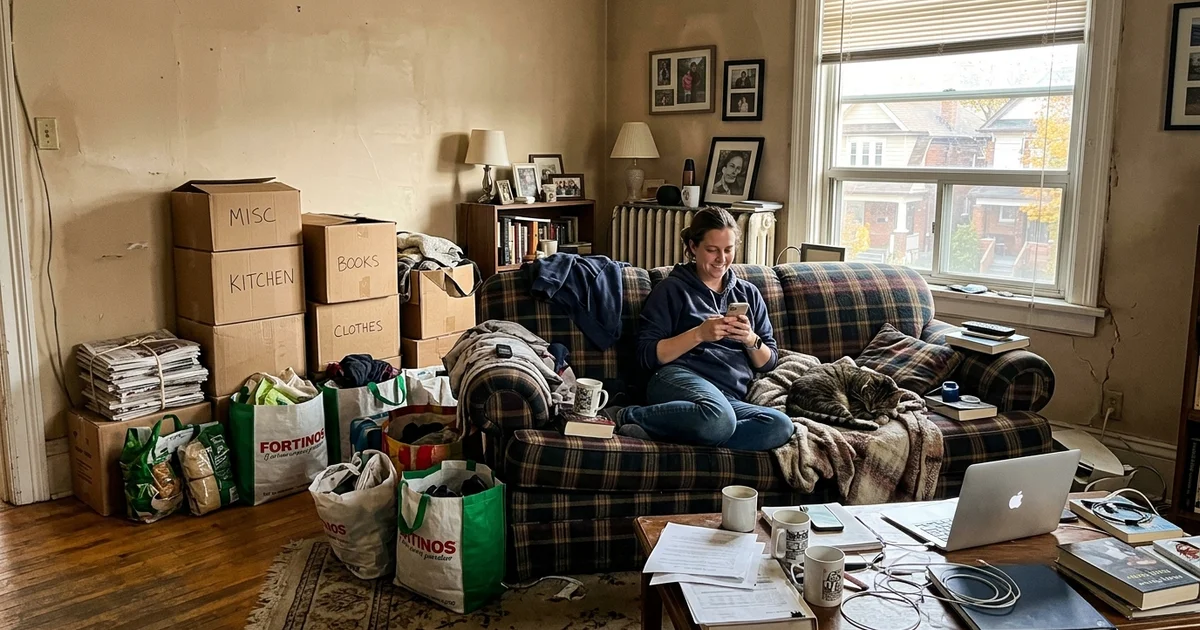
The Clutter Image Scale is a nine-level visual reference created by the Institute for Challenging Disorganization (ICD) to describe hoarding severity consistently.
Our teams see this friction daily when families try to explain a situation.
The ambiguity makes planning a safe resolution almost impossible.
This standardized tool maps out hoarding levels 1-9 using photographs of kitchens, bedrooms, and living rooms at various stages of accumulation.
It removes the judgment and ensures everyone involved is speaking the exact same language.
Attaching a specific number to a photograph takes the emotion out of the room, which is why professional hoarding cleanup assessments start right there.
We will outline how this scale works, what the true threshold for intervention is, and how to use it practically during difficult conversations.
The Levels in Plain Language
Roughly 2.5 percent of the population faces clinical hoarding challenges, meaning about 1 in 40 Canadians manage this disorder in some form. Understanding the clutter image scale hoarding levels is the first step to finding a practical solution. Our experience shows that breaking the problem down into categories reduces anxiety for everyone involved.
The scale organizes these environments into three distinct bands. The visual levels track three major transition points:
- Loss of function: When a room can no longer be used for its intended purpose.
- Loss of safety: When structural integrity or fire egress is compromised.
- Loss of sanitation: When biohazards begin to accumulate.
Levels 1 to 3 describe ordinary household clutter. Surfaces are covered, storage is full, and rooms look untidy, but everything works. Doors open, appliances function, floors are walkable, and there is no sanitation concern. Most homes sit here at some point, especially during a move or after a loss.
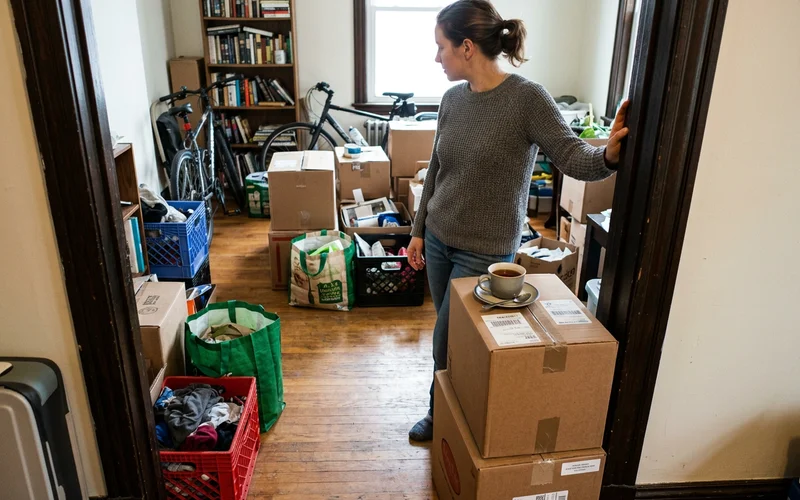
Levels 4 to 6 are where function starts to degrade. Furniture becomes unusable because it is covered, and one or more rooms stop being used for their purpose. Pathways narrow, increasing the risk of dangerous falls for elderly occupants.
Cleaning becomes impractical in these spaces, so dust and grime rapidly accumulate. Spoiled food or early pest activity may also appear. Family members usually start worrying somewhere in this band.
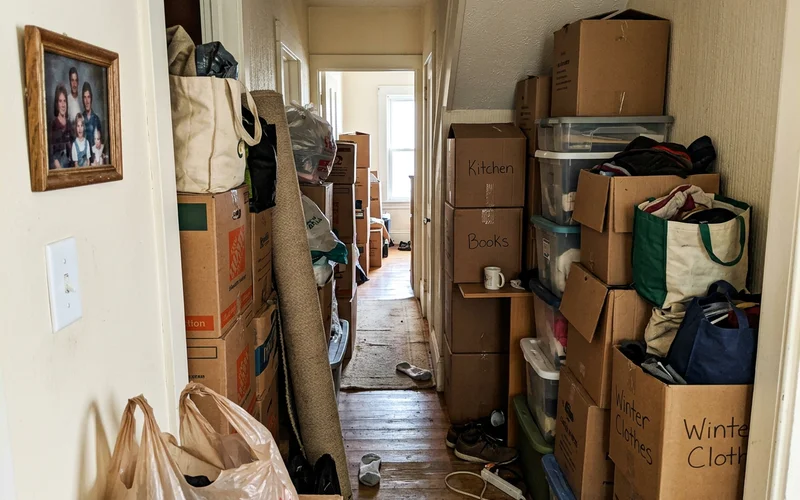
Levels 7 to 9 describe severe accumulation with structural and health consequences. Pathways narrow to single-file or disappear completely. Doors and windows may be blocked, directly violating fire safety codes which require clear exit routes.
In these severe stages, appliances and plumbing often do not work. Human or animal waste, heavy pest infestation, mould, and structural damage are common. At level nine, rooms are frequently filled to a significant height and exits are compromised.
Why Severity Alone Does Not Decide It
Here is the part that surprises people: the visual level on the ICD scale is not the automatic trigger for professional help. Contamination is the real deciding factor. A 2025 study on housing insecurity from the Canadian Mortgage and Housing Corporation (CMHC) highlighted that unsafe living conditions, rather than just volume, put individuals at the highest risk of eviction.
A level five home that is simply full of belongings, with working plumbing and no pests, is a clearance and organisation job. It may be large, but it is not immediately dangerous.
A level three home with a rodent infestation, a non-functioning toilet, or spoiled food throughout is a biohazard environment. The fact that the volume is lower does not make it safer, as exposure to rodent droppings can transmit diseases like Hantavirus.
Our crews treat sanitation breaches as immediate emergencies, even in low-clutter environments. The presence of these hazards dictates the required response.
The three questions that actually matter
Can someone get out of every room in a fire? Is there waste, spoiled food, pest activity, or mould? Do the essential systems, plumbing, heating, and cooking, still work? A “no” to any of these means the situation needs help regardless of where it sits on the scale.
Where the Real Thresholds Sit
Determining when to intervene requires looking past the visual clutter to identify active safety hazards. We focus on five primary risk factors that dictate the urgency of the situation. A 2024 consensus by hoarding researchers noted that structural integrity and fire load are among the most critical safety risks assessed in hoarded homes.
Egress and Fire Code Compliance
Blocked exits turn an ordinary house fire into a fatality. Our specialists prioritize clearing these pathways immediately upon arrival. Strict adherence to local fire regulations is non-negotiable. Under local regulations like the Ontario Fire Code, residential properties must maintain unobstructed exits and egress windows. Failing to meet these standards often results in mandatory cleanup orders from local fire departments.
Sanitation and Biohazard Risks
Non-functioning plumbing, accumulated human or animal waste, and spoiled food are health hazards, not housekeeping problems. They require specialised PPE, containment, and licensed disposal protocols. Municipalities enforce strict property standards, such as Toronto’s Municipal Code Chapter 629, which requires landlords and owners to maintain properties free of waste accumulations.
Pest Infestations
Rodents, cockroaches, and fleas carry disease and contaminate surfaces and insulation. Clearing material around an active infestation relocates the problem rather than solving it. A coordinated approach is essential, combining professional junk removal with targeted pest control to ensure the home becomes truly safe.
Structural and Environmental Concerns
Weight loading on floors, hidden water damage behind piles, and mould growing in unventilated stacked material all appear at higher levels on the scale. These issues are usually invisible until the material comes out. Heavy accumulation also traps moisture against walls, accelerating rot in the framing.
Caregiver and Occupant Safety
If the resident is elderly or has mobility limitations, the fall risk in a level six home is significant on its own. Narrow pathways make the use of walkers or wheelchairs impossible. Restoring clear, 36-inch pathways is a primary objective to ensure daily living activities can resume safely.
Using the Scale in a Family Conversation
If you are trying to raise this with a parent or sibling, the scale can help because it gives you something neutral to point at. Mentioning that a home looks like an ICD level six shifts the focus from their behaviour to the physical environment.
Our mediation experts find that this single shift in phrasing drastically lowers defensive reactions. Leading hoarding experts, like Dr. Randy Frost, emphasize that reducing emotional language is essential for gaining cooperation. “I think the house is around a level six and I’m worried about the stairs” lands very differently from “the house is a disaster”.
It also helps to separate the two conversations. Safety and sanitation are urgent and specific. The broader question of accumulation is a longer road, often involving clinical support, and it does not have to be resolved before the immediate hazards are dealt with.
Here is a quick reference for reframing your concerns:
| Emotional Language (Avoid) | Objective Language (Use Instead) | The Practical Focus |
|---|---|---|
| “This place is a filthy disaster.” | “There is a sanitation concern in the kitchen.” | Addressing specific hygiene risks. |
| “You have too much junk everywhere.” | “The pathways are narrowing to a level five.” | Restoring safe walking spaces. |
| “You’re going to burn the house down.” | “The front exit is currently blocked.” | Meeting basic fire code standards. |
If you are not sure where a property sits, describe it to us on the phone and we will tell you honestly. Some of those calls end with us saying it does not need us yet, and that is a perfectly good outcome. Our guide on what the cleanup process involves explains what happens next when hoarding needs professional cleanup.