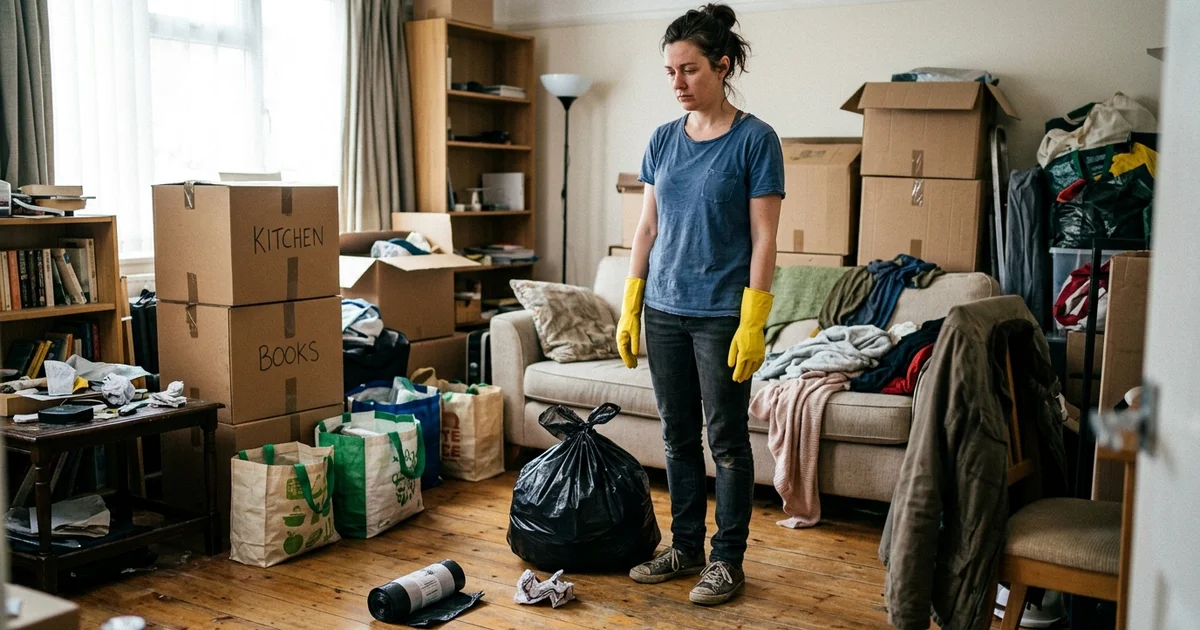
Our team sees families hit a wall all the time when trying to manage an estate clearance on their own. You know exactly how quickly a standard cleanout can spiral into a hazardous project. When weighing diy vs professional hoarding cleanup, plenty of situations can actually be handled without a specialized company.
We would much rather give you an honest assessment than pretend otherwise.
If a property has accumulated material but no contamination, a motivated family with a rented bin can genuinely do it. What changes the calculation is not the sheer volume of items. Our experience shows that two specific factors change everything:
- Severe biohazard contamination and physical safety hazards.
- Strict time pressure and looming deadlines.
We know professional hoarding cleanup exists specifically for situations involving these hazards. Doing it yourself moves from difficult to unwise once these factors appear. In the case of disposal, DIY methods can even become unlawful.
Our data provides a clear picture of what to expect. The following comparison breaks down the exact differences to help you make the right choice. This side-by-side view highlights the practical realities of each approach.
The Comparison: DIY vs Professional Hoarding Cleanup
We rely on the table below to outline the basic realities of each approach. The breakdown highlights the practical differences between handling the job yourself and hiring specialists. This makes it easier to see where your specific situation lands.
| Factor | DIY | Professional |
|---|---|---|
| Suitable severity | Light to moderate, no contamination | Any, including biohazard |
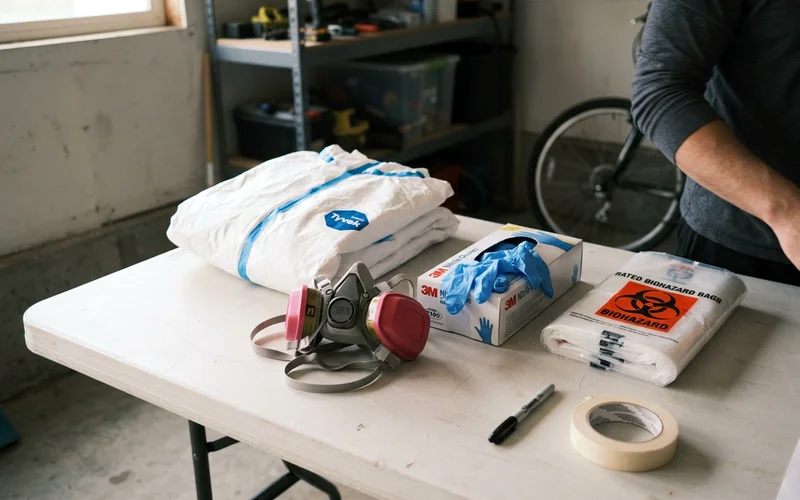
| Protective equipment | Household gloves, dust mask | Tyvek, P100 respirators, containment, HEPA filtration |
| Biohazard disposal | No lawful route | Licensed haulers under O. Reg. 347 |
| Sharps handling | High injury risk | Puncture-resistant tools, rated containers, manifest |
| Typical timeline | Weeks to months | Days |
| Valuables retrieval | Often missed in bulk bagging | Systematic search before disposal |
| Documentation | None | Photos, scope, disposal records |
| Emotional cost | Carried entirely by family | Carried by a crew who do this daily |
Understanding the Severity Scale
Our technicians rely on the Institute for Challenging Disorganization criteria to evaluate these homes. The clutter image rating scale grades hoarding severity from Level 1 to Level 5. Level 1 or 2 environments usually just need sorting and a standard dumpster rental.
We step in when properties hit Level 3 or higher. Anything at these upper stages often involves blocked exits, structural damage, or biohazards. This is the tipping point where professional intervention becomes a safety requirement.
The Four Risks That Do Not Show Up in the Plan
Our crews frequently hear from homeowners who underestimated the severe hoarding cleanup risks hidden beneath the clutter. Pathogen exposure is a severe issue in Canadian homes. The Public Health Agency of Canada warns that deer mice carry hantavirus, which causes severe respiratory illness.
We find that these viruses remain relatively harmless while sitting still in rodent droppings. Inhaling airborne dust during a sweep or vacuuming session is how the infection spreads. This makes wearing a simple dust mask entirely inadequate for a hoarding cleanup.
Hidden Sharps and Physical Hazards
Our initial property assessments constantly reveal concealed sharps. Needles, broken glass, and rusted blades sit deep in soft material where a hand goes first. The injury itself might seem minor, but the bloodborne pathogen exposure testing that follows is a long, anxious process.
We also strictly account for extreme structural instability during a clear-out. Stacked material that has been in place for years does not fall the way you expect. Crush syndrome and blunt force trauma from collapsing piles over four feet tall are significant risks in severe hoards.
Legal Liability and Waste Rules
Our teams handle all disposal logistics to ensure compliance with provincial laws. Biohazardous material cannot lawfully enter a general waste stream in Canada. Under the Ontario Environmental Protection Act (O. Reg. 347), contaminated waste must be handled by licensed haulers.
We provide documentation proving that all hazardous materials reached the correct facilities. Local transfer stations actively refuse uncertified loads containing medical waste or mold. A family can easily end up stranded with a full rented bin that nobody will take.
The one nobody warns you about
The emotional cost. Sorting a parent’s belongings, item by item, while they watch or after they have died, is heavier than people expect. Families frequently start a DIY clear-out and stop partway, not because of the physical work, but because they could not keep doing it.
When DIY Genuinely Makes Sense
Our advisors always tell callers who ask, “should I clean a hoard myself,” that they can handle the project if certain conditions are met. There must be no spoiled food, waste, or pest activity. Plumbing and heating systems need to be fully functional.
We provide a basic checklist for a safe DIY project with the following requirements:
- Clear exits with absolutely no structural mold.
- A willing resident and family members with the emotional capacity to finish the job.
Our recommendation is to rent a dumpster if your situation meets all those criteria. If you plan to tackle this, expect to pay between $350 and $800 for a standard 10 to 40-yard garbage bin rental in Canada. A flat-rate bin is much more efficient than making dozens of trips to the local dump.
We suggest using our guide on assessing severity to help you judge where the property sits. You should still start with one room and wear proper gloves and an N95 respirator. Dust accumulation alone is significant enough to cause respiratory irritation.
When to Stop and Call
Our experts strongly advise halting the project immediately if you encounter any major safety red flags. Stop working if you find needles or drug paraphernalia. You must also step away if you uncover animal or human waste beyond a single, isolated incident.
We train our technicians to safely remediate black mold discovered behind walls or beneath flooring. Cease your efforts if a floor feels soft, unstable, or compromised by water damage. A project should also end the moment a transfer station refuses your garbage load.
Our company considers relationship preservation a completely valid reason to step away. Stop if the cleanup process is severely damaging your connection with your loved one. Handing the physical labor to a crew who do this daily preserves something much more valuable than the money saved.
What a Professional Job Actually Buys
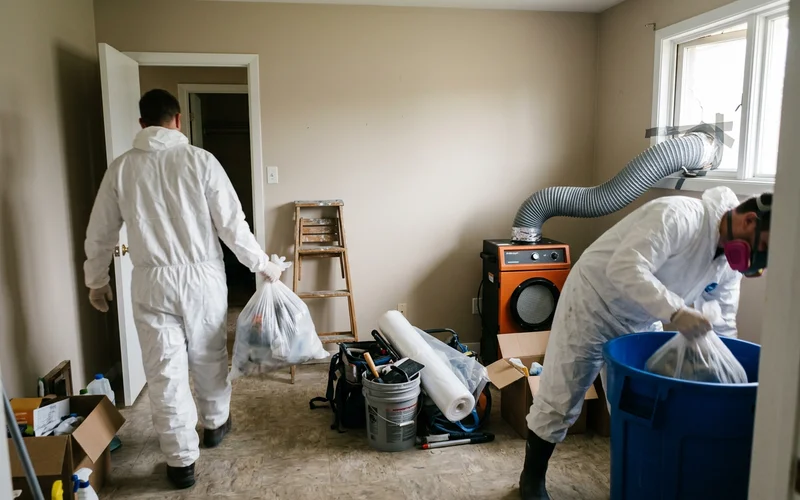
We remind clients that they are paying for speed, lawful disposal, and emotional distance. Three technicians wearing proper Tyvek suits and P100 respirators can clear in days what takes a family months. Lawful disposal guarantees that parts a regular bin cannot take are handled correctly.
Our crews prioritize the retrieval of important items during the clearing process, including:
- Legal documents and property deeds.
- Hidden cash and irreplaceable family photographs.
We recover these items carefully to prevent them from being blindly bagged and tossed. This methodical search protects a family’s financial assets and precious memories. Essential distance from a highly stressful event is another major benefit.
Getting a Straight Answer
Our service ensures you do not have to be the person who hauls out the trash. For most families, removing themselves from the physical work turns out to be the smartest decision they make. Sometimes, a quick phone call ends with a realization that professional help is not required.
We are happy to give you a straight answer on which side of the line your situation sits. If you are unsure, simply describe the property details to us. The debate over diy vs professional hoarding cleanup comes down to safety, and the right approach makes all the difference.
Our main goal is making sure you have the facts to make a safe decision. Reach out today if you need guidance on your next step.