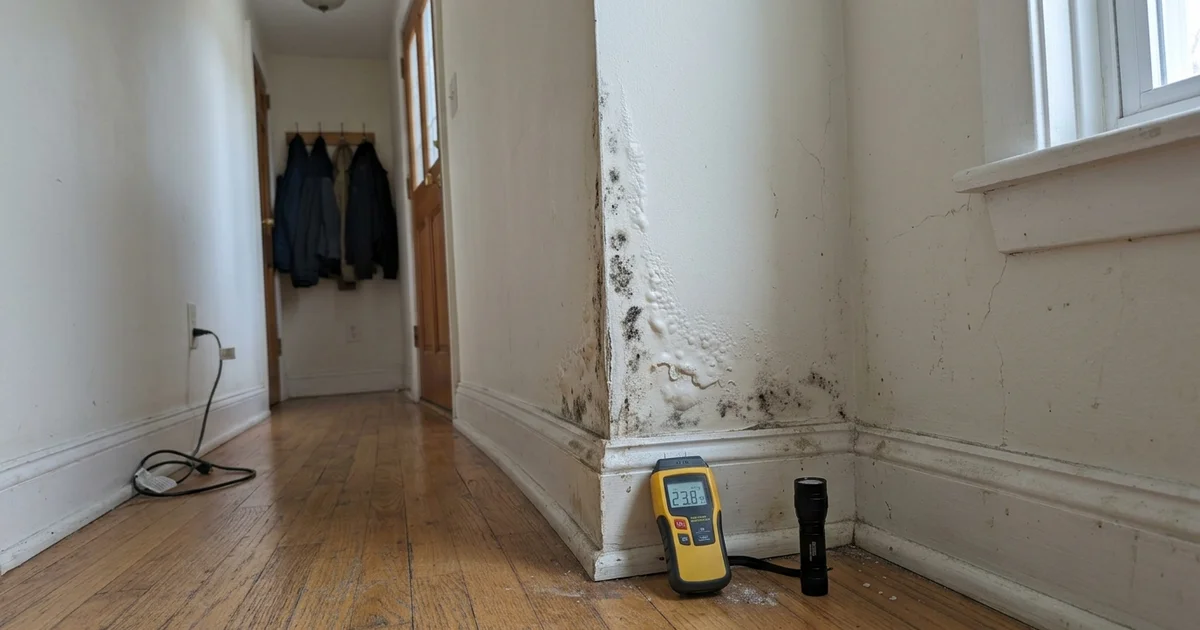
We frequently step into estate clearances across Canada where a hidden leak has quietly compromised the entire property.
Discovering a flooded basement underneath years of accumulated belongings immediately turns an emotional task into a structural emergency.
Our teams know that a rapid water damage response is the absolute dividing line between saving the home and funding a total demolition.
The 2026 industry data confirms that acting within the first two days prevents the contamination from multiplying. If you are wondering how fast does water damage cause mould, we will break down the exact timeline and outline a practical plan to stop the spread.
The 24 to 48 Hour Window
Mould requires four simple ingredients to thrive. Our technicians constantly remind families that moisture, organic food, moderate temperatures, and time are all a spore needs to survive. A damp building interior supplies the first three instantly.
We tell every client that time is the only variable they can actually control during a crisis. Under typical Canadian indoor conditions, those microscopic spores begin colonizing damp drywall and wood framing within roughly 24 to 48 hours.
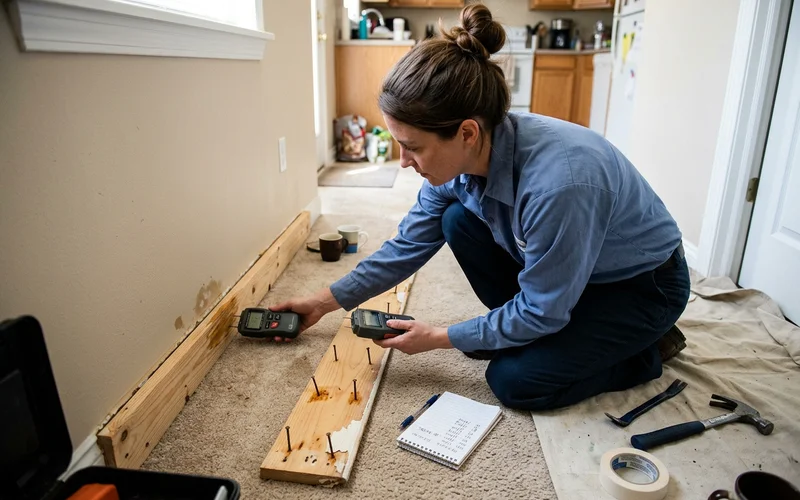
Our crews use FLIR thermal imaging cameras during these early hours. This specific technology allows us to see moisture pockets hidden deep behind drywall without tearing the walls open. By the time you can actually see the fuzzy spots, the colonization is fully established.
What Happens Hour by Hour
The exact mould after water damage timeline dictates the entire scope of the project. We monitor these specific stages closely to determine the safest approach.
The First Few Hours
Water spreads quickly and wicks up the drywall paper. Surfaces soak up the moisture, but the structural integrity remains intact. Our focus remains entirely on rapid water extraction during this brief window.
Hours 24 to 48
This is the critical 24-48 hour mould window where colonization officially begins on damp organic surfaces. According to the ANSI/IICRC S500 standard, a clean water leak degrades into Category 2 grey water after 24 hours — the difference between Category 1, 2 and 3 water determines how aggressive the response has to be. We start to see bacterial populations multiply rapidly, and a distinct musty odour begins to fill the room.
Drywall softens and the wood framing starts absorbing the excess liquid.
Days 3 to 7
Visible growth becomes undeniable across the affected surfaces. Materials begin warping, and standard Canadian drywall softens to the point of crumbling. Our teams have to shift the entire project scope from drying the property to physically removing the damaged materials.
Beyond a Week
Established colonization now spreads aggressively across the affected materials and structural components. Strict containment barriers and independent clearance testing become mandatory requirements. We see restoration costs rise sharply at this stage.
The IICRC S500 Category Escalation Principle The restoration industry relies on strict standards for water contamination. A clean Category 1 supply line leak picks up contaminants and becomes Category 2 grey water after one day. If left standing for 48 hours, bacterial multiplication turns it into Category 3 black water. That simple reclassification immediately forces restoration teams to tear out porous materials instead of drying them, which often doubles the final project price.
Why Household Drying Usually Fails
Opening windows and running a basic hardware store box fan will only dry the surface of the materials. It does not pull moisture out of the dense building structures. We constantly find trapped moisture inside the drywall cores, the wall cavities, and under the laminate flooring during our inspections.
Surface air movement does very little to draw this hidden water out. Our professional structural drying process works entirely differently. The technicians on site rely on Dri-Eaz low-grain refrigerant (LGR) dehumidifiers.
These specific commercial units are essential because they continue pulling moisture from the air even when the indoor humidity drops below 30 percent. We pair these powerful dehumidifiers with high-velocity air movers to create rapid evaporation from the material surfaces.
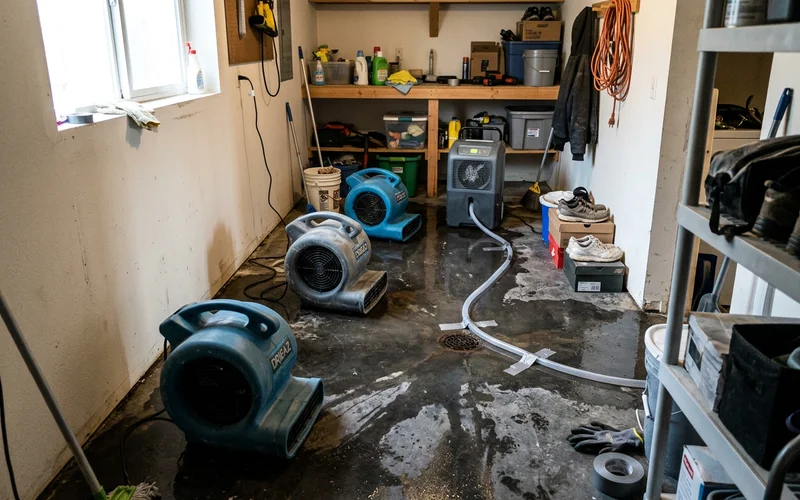
The equipment logs daily moisture readings to confirm the materials reach a verified dry standard. Our policy ensures the machines stay running until the numbers confirm the result, rather than stopping when the surface simply feels dry to the touch.
The Cost Curve
Families managing an estate often want to wait and see if the water will dry on its own. We strongly advise against this delay. Recent 2026 data shows that the national average for water damage restoration in Canada sits around $3,865, but the total bill depends entirely on how quickly you act.
Our pricing breakdown highlights exactly why a fast response matters.
| Time to Response | Typical Mitigation Scope | Contamination Level | Estimated Cost Impact (CAD) |
|---|---|---|---|
| Within hours | Extraction and aggressive structural drying | Category 1 (Clean) | $3 to $4 per square foot |
| 1 to 2 days | Drying combined with targeted material removal | Category 2 (Grey) | $4 to $6.50 per square foot |
| 3 to 7 days | Extensive removal, containment, mould remediation | Category 3 (Black) | $7 to $7.50 per square foot |
| Over a week | Full structural remediation, clearance testing, rebuild | Severe Category 3 | Highest (often exceeds $10,000) |
This cost curve is the whole argument for calling immediately rather than waiting to see how bad it looks in the morning. The difference between a Tuesday night call and a Thursday morning call is frequently the difference between simply drying a basement and completely rebuilding it.
Bacteria and the Health Side
People naturally focus on the visible mould, but the bacterial load carries equal danger. Health Canada explicitly warns that damp conditions in homes significantly increase the risk of respiratory allergy symptoms. We know this environment will quickly exacerbate asthma, particularly for seniors, children, and immunocompromised individuals living in the space.
Health Canada notes several specific symptoms linked to damp indoor environments:
- Worsening asthma or new wheezing
- Persistent coughing and phlegm build-up
- Severe eye, nose, and throat irritation
Sewage and groundwater carry dangerous organisms that multiply rapidly in warm, wet environments. Our crews wear full personal protective equipment when dealing with Category 2 and 3 water for a reason. Proper disinfection becomes a mandatory safety requirement rather than an optional cleaning upgrade.
If the respiratory symptoms of your family members improve when they leave the house, you need to take that pattern seriously.
If It Has Already Been Days
Do not assume the window for protecting the property has closed. Fast action still limits the structural spread and protects the remaining uncontaminated areas. Our initial assessment will tell you honestly whether you are dealing with a standard drying scenario or a complex remediation project.
The required approach simply shifts to mould remediation with strict containment protocols and independent clearance verification. We are ready to evaluate the property and provide a clear plan forward.
Reach out to our response team today to schedule an immediate inspection and secure the home.